
To clean a stainless steel sink, rinse it, sprinkle on baking soda, scrub gently along the grain with dish soap or a little white vinegar, then rinse and dry completely.
That simple routine handles everyday grime and prevents the water spots and dull film that make stainless steel look tired.
The catch is that a few common products and habits quietly damage the finish, so knowing what to avoid matters as much as knowing what to use.
Champia Real Estate Inspections has inspected more than 100,000 homes since 1987, and kitchen fixtures are one of the first things our inspectors check.
This guide walks through the full routine, stain removal, and how to keep your sink shining.
What You Need to Clean a Stainless Steel Sink
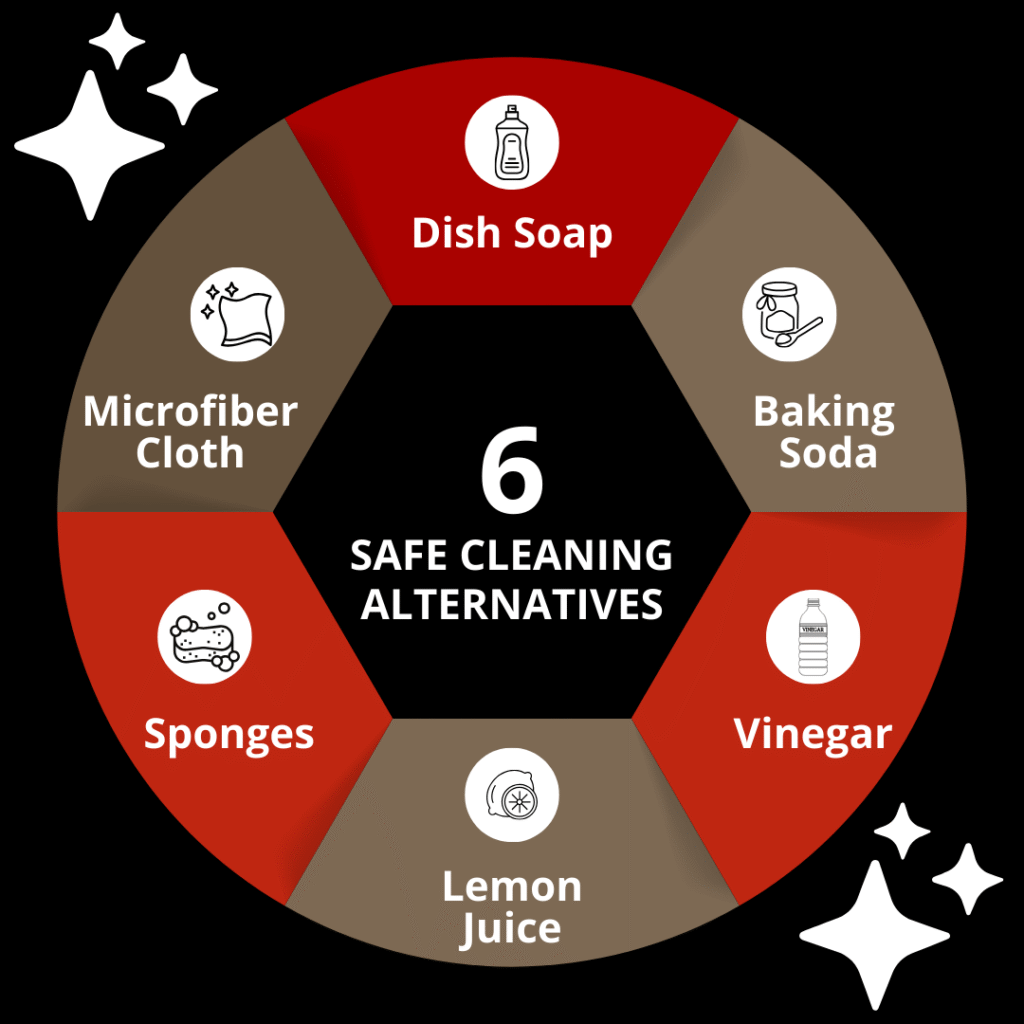
You can clean a stainless steel sink with items you already have in the kitchen, no specialty products required. Gather these before you start:
- Baking soda (a gentle, non-scratch abrasive)
- Dish soap
- White vinegar
- A soft cloth or non-abrasive sponge
- A microfiber towel for drying
- Optional: a lemon, and a few drops of olive oil or a stainless cleaner like Bar Keepers Friend for polishing
Avoid steel wool, scouring pads, and stiff brushes. They scratch the surface and leave behind tiny iron particles that rust later.
How to Clean a Stainless Steel Sink Step by Step
Follow these steps for a clean, spot-free sink in about ten minutes:
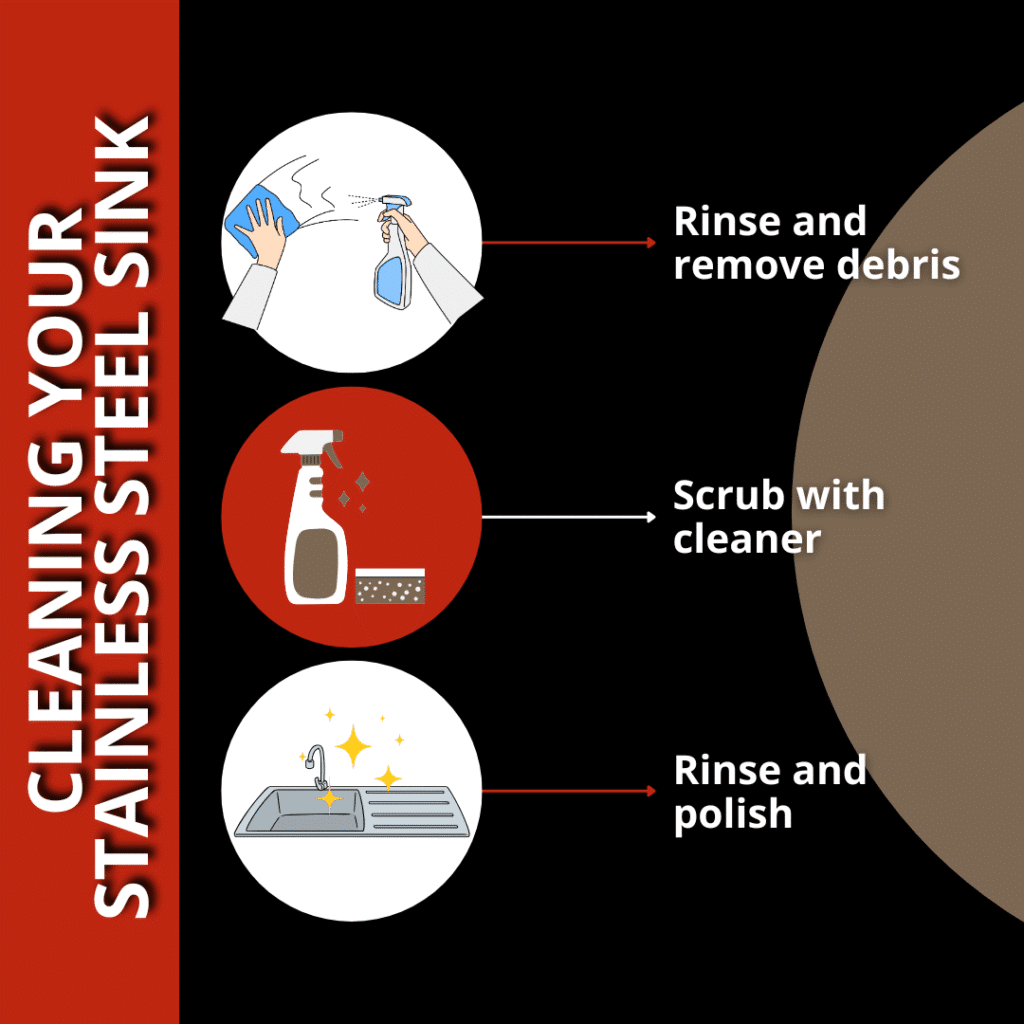
- Clear and rinse. Remove dishes and rinse the basin with warm water to wash away loose debris.
- Sprinkle baking soda. Dust the damp surface with baking soda, focusing on stained or greasy spots.
- Add soap or vinegar. For daily cleaning, add a little dish soap. For tougher buildup or water spots, spray on white vinegar and let it fizz for a few minutes.
- Scrub with the grain. Stainless steel has a directional grain. Scrub gently along it, never across, using a soft cloth or sponge.
- Rinse thoroughly. Rinse away all residue so no baking soda or vinegar is left sitting on the surface.
- Dry completely. Wipe the sink dry with a microfiber towel. Drying is the single best habit for preventing water spots and scale.
If your drain needs freshening, pour in baking soda followed by vinegar, wait about ten minutes, then flush with hot water.
A clean sink and a slow drain are different problems, and a dishwasher that smells can be a related kitchen issue, which we cover in why your dishwasher smells bad and how to clean it.
How to Remove Stains and Hard Water Spots
Most stains on stainless steel are surface deposits, not damage to the metal, so they lift off with the right method. Match the method to the stain:
- Hard water spots and film: Wipe with white vinegar, let it sit briefly, then rinse and dry. The acid dissolves mineral scale.
- Grease and food stains: A baking soda paste (baking soda plus a little water) scrubbed along the grain.
- Rust-colored spots: These usually come from cast iron pans or cans left in the sink, not the sink rusting. A baking soda paste or a stainless cleaner removes them.
- Stuck-on grime: A cut lemon dipped in a little coarse salt works as a natural scrub and leaves a fresh scent.
For brown or tea-and-coffee staining, a baking soda paste left on for a couple of minutes and scrubbed along the grain usually lifts it.
If a stain resists, repeat the treatment rather than reaching for something harsher, since patience beats abrasion on stainless.
One important rule: do not leave vinegar or lemon juice sitting on the surface for long periods. Brief contact is fine, but prolonged acid exposure can discolor the finish. Rinse and dry when you are done.
How to Make a Stainless Steel Sink Shine
To restore shine, clean the sink first, then buff it with a tiny amount of oil along the grain. After the basin is clean and fully dry, put a few drops of olive oil (or a purpose-made stainless polish) on a microfiber cloth and wipe in the direction of the grain.
This fills in micro-scratches and brings back the reflective finish. Wipe off any excess so the surface is not greasy. For a deeper restore on a dull sink, a stainless cleaner such as Bar Keepers Friend, applied with the grain and rinsed well, works without scratching.
To disinfect rather than just clean, skip the bleach. Spray the basin with hydrogen peroxide or wipe it down with rubbing alcohol, let it sit for a few minutes, then rinse and dry.
This kills germs without the pitting that chlorine cleaners cause, and it is worth doing after preparing raw meat or letting dishes soak. A clean, dry, polished sink not only looks better, but it also resists the buildup that traps bacteria and odors in the first place.
What You Should Never Use on a Stainless Steel Sink
The fastest way to ruin a stainless sink is to use the wrong cleaner or tool. Keep these away from the finish:
- Bleach and chlorine cleaners. They corrode and pit stainless steel. Use hydrogen peroxide or rubbing alcohol to disinfect instead.
- Steel wool and abrasive pads. They scratch and embed iron particles that rust.
- Abrasive powders on polished finishes. Use only gentle baking soda, and always work with the grain.
- Leaving things sitting in the sink. Standing water, wet sponges, rubber mats, cast iron, and metal cans all cause spots or rust transfer.
The manufacturer’s care guides back this up. Moen’s stainless steel sink care guide specifically warns against steel wool and harsh chemicals and lists which cleaners are safe by stain type.
How Often Should You Clean Your Sink?
A quick daily rinse-and-dry plus a weekly deeper clean keeps a stainless sink looking new. Here is a simple schedule:
| How often | What to do |
|---|---|
| After each use | Rinse and wipe dry to prevent spots |
| Weekly | Full baking soda + dish soap clean, then dry |
| Monthly | Vinegar treatment for hard water, plus a polish |
| As needed | Disinfect with hydrogen peroxide or alcohol |
Hard water makes spots form faster, so homes with mineral-heavy water benefit most from the daily dry. Keeping the kitchen clean also pays off if you are preparing to sell, as we explain in how clean your house needs to be for a home inspection.
Related Questions to Explore
Can I use steel wool to clean my stainless steel sink?
No. Steel wool scratches the finish and leaves behind tiny iron particles that rust and create new stains. Use baking soda with a soft cloth or sponge instead, always scrubbing along the grain.
Is it safe to use vinegar on my stainless steel sink?
Yes, white vinegar is safe and effective for cleaning and removing hard water spots, as long as you do not let it sit for a long time. Rinse and dry the sink after using it, since prolonged acid contact can discolor the finish.
How do I remove hard water stains from a stainless steel sink?
Wipe the spots with white vinegar, let it sit for a few minutes, then rinse and dry thoroughly. To prevent them from coming back, dry the sink after each use so minerals do not have time to deposit.
How do I get rust spots off a stainless steel sink?
Most rust spots are deposits transferred from cast-iron pans or cans, not the sink itself. Scrub them with a baking soda paste or a stainless cleaner along the grain, then rinse and dry, and stop leaving metal items sitting in the basin.
What should you never use on a stainless steel sink?
Never use bleach, chlorine cleaners, steel wool, or abrasive scouring pads, and do not leave standing water or metal items sitting in the sink. These cause pitting, scratches, and rust transfer that permanently mar the finish.
When to Call a Professional
Cleaning a sink is a do-it-yourself job, but the plumbing behind it is not always. If you notice persistent slow drainage, leaks under the cabinet, water stains, or odors that cleaning does not fix, those can point to plumbing problems worth a professional look.
During a home inspection, our certified inspectors check sinks, faucets, drains, and the cabinet below for exactly these issues.
Champia Real Estate Inspections has served Georgia homeowners since 1987 with certified, ASHI-credentialed inspectors and a free 180-day warranty that is double the industry standard.
If you are buying or selling and want the full picture of a home’s plumbing and fixtures, you can schedule an inspection or learn more about our home inspection services.
Conclusion
A stainless steel sink stays bright with a simple routine and the right products. Keep these takeaways in mind:
- Clean with baking soda and dish soap or vinegar, always scrubbing along the grain, then dry.
- Skip bleach, steel wool, and abrasive pads, which damage the finish.
- A daily rinse-and-dry prevents the water spots that dull stainless steel over time.
For homeowners buying or selling in Georgia, the team at Champia is here to help you see a property the way a professional does. Reach out anytime to schedule your inspection.