
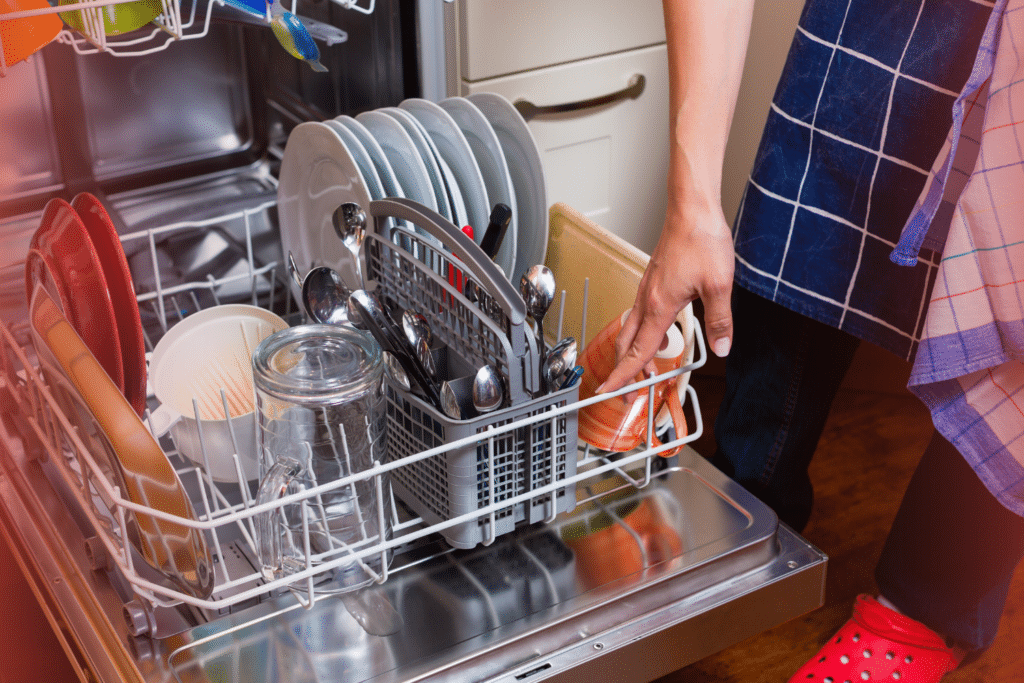
If your dishwasher smells bad, the most common cause is trapped food, standing water, or moisture buildup inside the unit or its drain system. While the smell may seem minor at first, it often points to maintenance issues or hidden plumbing problems that should not be ignored.
Dishwasher odors are one of the most common appliance complaints homeowners report. They also come up during home inspections, especially in kitchens where plumbing connections are shared between the sink, garbage disposal, and dishwasher.
This guide explains why dishwasher odors happen, what they usually mean, and how homeowners and buyers can respond before the issue gets worse.
Why Does My Dishwasher Smell Bad After Running It?
A dishwasher should smell neutral or clean after a wash cycle. When it does not, something is interfering with how water drains, dries, or circulates.
Dishwashers rely on three key steps:
- Hot water washes dishes
- Dirty water drains away
- The interior dries before the next use
When any of these steps fail, odors can develop quickly.
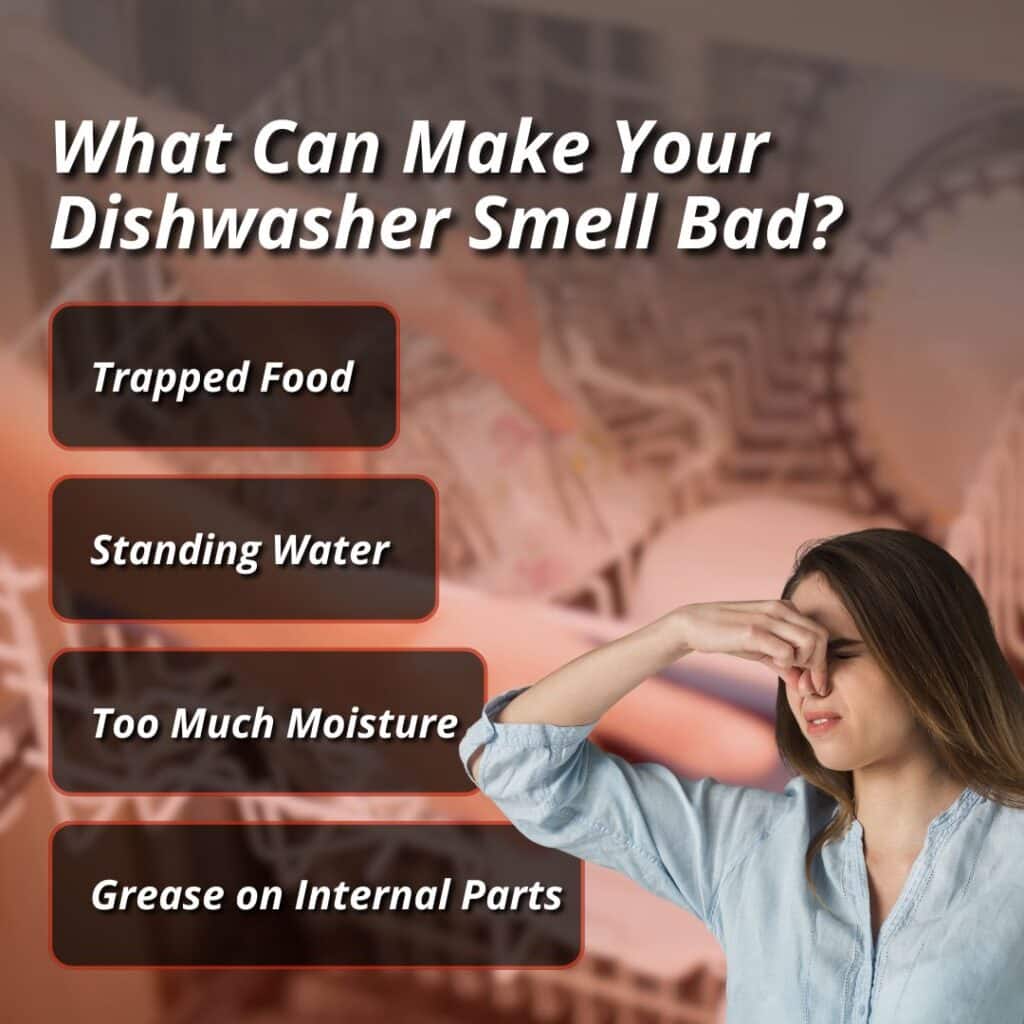
A dishwasher smells bad after running when:
- Food particles stay trapped in the filter or drain
- Water does not fully exit the unit
- Moisture stays inside too long
- Grease coats internal parts
Even small issues can compound over time, especially in busy households that run the dishwasher daily.
Common Reasons Your Dishwasher Smells Bad
1. Food Buildup in the Filter
The dishwasher filter is designed to catch food before it enters the drain line. Over time, that food breaks down and starts to smell.
Many homeowners do not realize their dishwasher even has a filter, which makes this one of the most overlooked causes of odor.
Signs of a dirty filter include:
- Sour or rotten smells
- Gritty residue on dishes
- Cloudy water is pooling at the bottom
Cleaning the filter regularly is one of the easiest ways to prevent dishwasher odors.
2. Standing Water at the Bottom of the Dishwasher
Standing water is another major reason a dishwasher smells bad. Even a small amount left behind after a cycle can smell unpleasant within a day or two.
This usually happens when:
- The drain hose is partially clogged
- The hose is kinked behind the unit
- The connection to the garbage disposal is blocked
- The dishwasher drain pump is struggling
Standing water is also a red flag during a home inspection, as it may point to broader drainage problems.
3. Grease and Soap Residue Inside the Dishwasher
Grease does not always rinse away completely, especially if cooler wash cycles are used often.
Over time:
- Grease coats interior walls and hoses
- Soap residue builds up inside the spray arms
- Odors are released when the dishwasher heats up
This is common in households that pre-rinse dishes lightly or use too much detergent. Running an occasional hot cycle can help break down grease buildup.
4. Mold and Mildew From Trapped Moisture
Dishwashers create a warm, dark, and damp environment after each cycle. If moisture does not escape, mold and mildew can grow.
This often happens when:
- The dishwasher door stays closed after use
- The drying cycle is skipped frequently
- Kitchen ventilation is limited
A musty or earthy smell is often a sign of mildew growth. Leaving the door slightly open after a cycle allows moisture to evaporate and helps prevent odors.
5. Sewer Gas Odors From Plumbing Issues
In some cases, a dishwasher smells bad even when it appears clean. This is often due to sewer gas entering the appliance through the drain system.
Common causes include:
- Improper drain hose loop height
- Missing or failed plumbing trap
- Poor venting in the drain system
Sewer gas smells are serious and should always be addressed. According to the Environmental Protection Agency, sewer gas exposure can cause headaches, nausea, dizziness, and irritation of the eyes and throat.
How a Clogged or Improper Drain Causes Dishwasher Smells
Dishwashers typically drain through the kitchen sink plumbing. This means any issue under the sink can affect the dishwasher.
During inspections, common drain-related problems include:
- Grease buildup in shared drain lines
- Improperly installed high loops
- Blocked or missing air gaps
- Slow-draining sinks connected to the dishwasher
When wastewater cannot flow freely, odors back up into the dishwasher and sometimes into the kitchen itself.
Could a Dishwasher Smell Mean a Bigger Plumbing Problem?
Yes. While many dishwasher odors are caused by maintenance issues, some indicate deeper plumbing concerns.
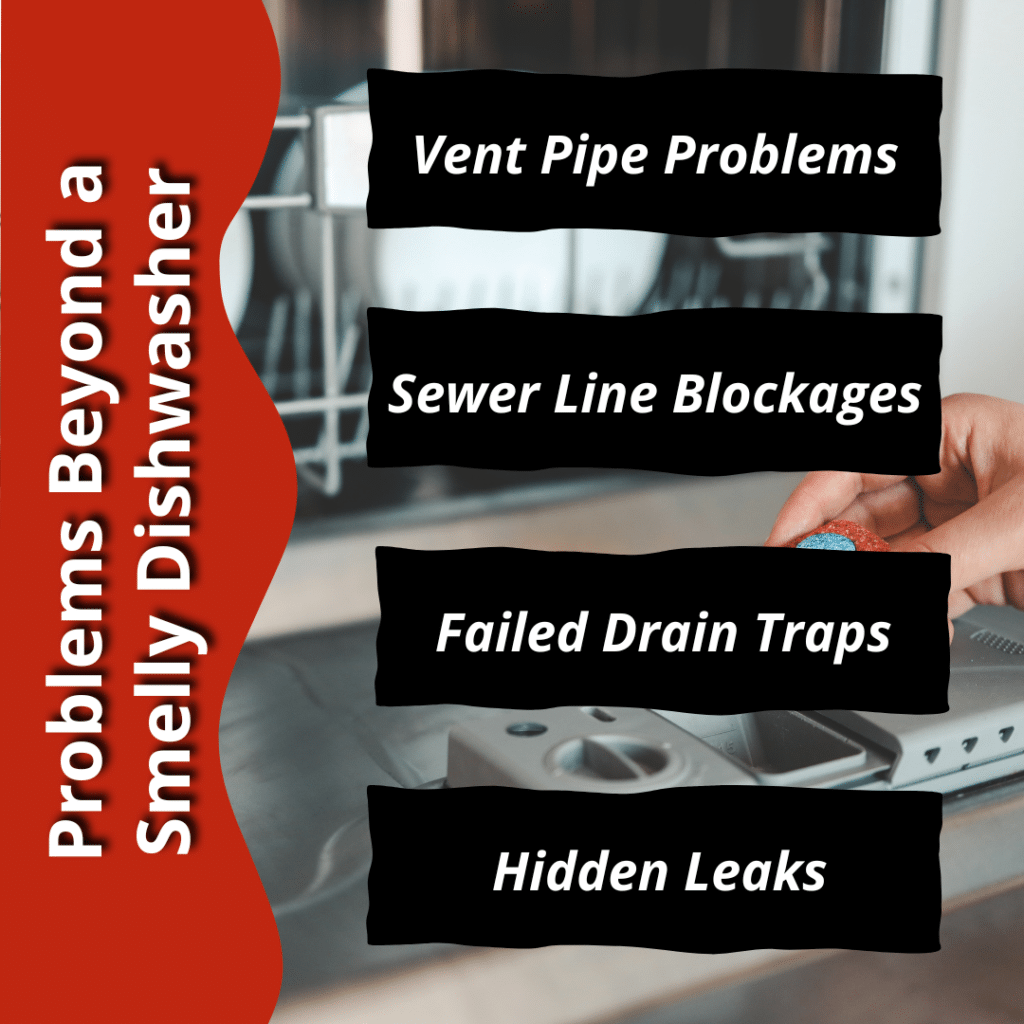
Persistent smells may point to:
- Vent pipe problems
- Partial sewer line blockages
- Failed drain traps
- Hidden leaks inside cabinets
Home inspectors often take appliance odors seriously because they can signal moisture damage or improper plumbing installations that are not visible at first glance.
What Homeowners Can Do When a Dishwasher Smells Bad
Homeowners can take several safe and simple steps before calling a professional.
Dishwasher Odor Troubleshooting Checklist
| Step | What to Check | Why It Matters |
| Clean the filter | Rinse monthly | Prevents food buildup |
| Check for standing water | Inspect after a cycle | Signals drain issues |
| Run a hot cycle | Use the hottest safe setting | Breaks down grease |
| Leave the door open | Allow moisture to escape | Reduces mold growth |
| Inspect under the sink | Look for leaks or odors | May reveal plumbing issues |
If smells return quickly after cleaning, the issue is likely more than surface-level. Actions homeowners can take include:
1. Check the dishwasher door gasket: Food residue, grease, and moisture can collect along the rubber seal. Wiping it with a damp cloth and mild soap can remove odor-causing buildup.
2. Inspect the spray arms for blockages: Clogged spray holes limit water circulation, allowing debris to remain inside and contribute to lingering smells.
3. Clean the garbage disposal if connected: Odors from a dirty disposal can travel back into the dishwasher through shared drain lines.
4. Note when the smell appears: Odors that show up after the dishwasher sits unused often point to moisture or airflow issues, while constant smells may signal drainage concerns.
5. Listen for unusual draining sounds: Gurgling, slow draining, or water backing up into the sink can indicate developing drain problems.
6. Watch for repeated odor return: If smells come back quickly after maintenance, the source may be hidden in the plumbing or drain system and is worth professional evaluation.
What Home Inspectors Look For When a Dishwasher Smells Bad
During a home inspection, a smelly dishwasher prompts a closer look at several systems.
Inspectors often check:
- Drain hose routing and loop height
- Air gap installation where required
- Signs of leaks under the sink
- Cabinet damage from moisture
- Plumbing connections serving the dishwasher
Moisture-related odors may indicate early cabinet damage, wood swelling, or hidden mold growth.
Why Dishwasher Smells Matter During a Home Inspection
For buyers, dishwasher odors can signal deferred maintenance or improper installation.
This matters because:
- Repairs may involve plumbing, not just the appliance
- Moisture issues can affect cabinets and flooring
- Sewer gas concerns raise health questions
For sellers, addressing dishwasher odors before listing helps reduce inspection findings and avoids last-minute repair negotiations.
How Dishwasher Odors Can Affect Kitchen Cabinets and Flooring
One overlooked issue with dishwasher smells is hidden moisture damage.
Slow leaks or recurring moisture can lead to:
- Warped cabinet bottoms
- Peeling laminate
- Mold growth inside cabinets
- Damage to nearby flooring
These problems often start small and worsen over time if not addressed.
Related Questions
Why does my dishwasher smell like rotten eggs?
This smell is often linked to sulfur bacteria, sewer gas, or food trapped in the drain system.
Is it safe to keep using a dishwasher that smells bad?
Occasional food odors are usually safe. Persistent sewer-like smells should be inspected.
Can dishwasher smells spread through the house?
Yes. Smells can move through shared plumbing lines or cabinet cavities.
How often should a dishwasher filter be cleaned?
Most manufacturers recommend monthly cleaning, with more frequent care for heavy use.
Will dishwasher odors show up on a home inspection report?
Yes. Odors may be documented as possible drainage, moisture, or plumbing concerns.
When to Call a Professional
You should consider professional help if:
- Odors return shortly after cleaning
- Standing water remains after cycles
- You smell sewer gas under the sink
- You are buying or selling a home
A professional inspection helps determine whether the problem is limited to the dishwasher or part of a larger plumbing concern.
Conclusion
A dishwasher smells bad for a reason. Sometimes the fix is simple. Other times, the smell is an early warning sign of drainage, moisture, or plumbing issues that deserve attention.
Addressing these problems early helps protect your kitchen, your health, and your home’s long-term value.
If you are concerned about appliance odors during a real estate transaction or want peace of mind about your home’s plumbing setup, a professional inspection with Champia Real Estate Inspections can help identify the root cause before it becomes a costly repair.