
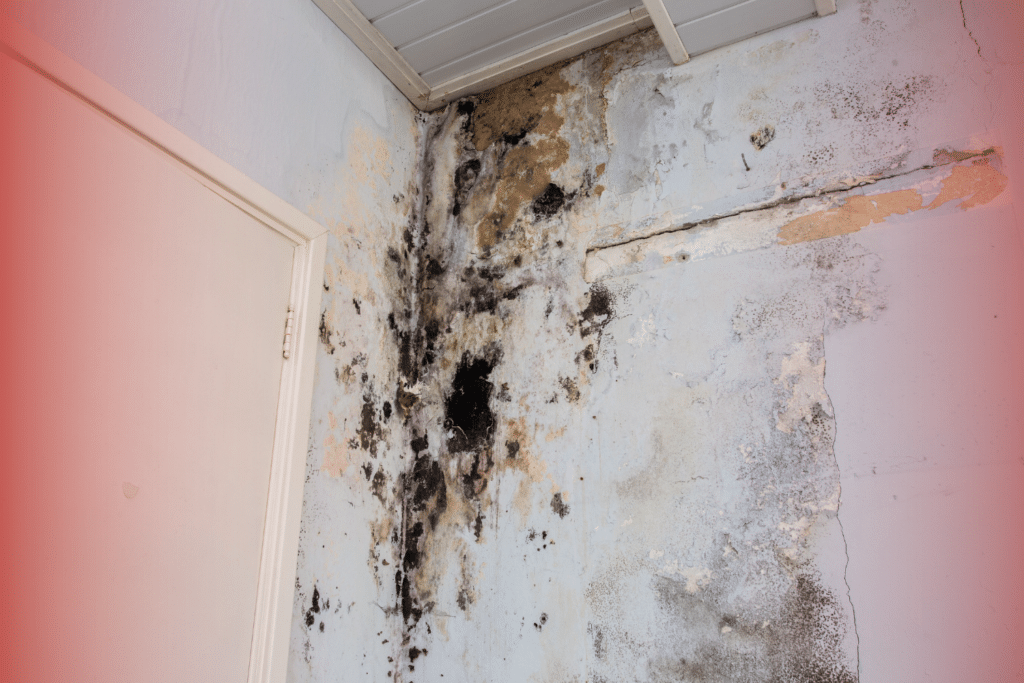
Most Atlanta homeowners know that water damage is bad news. But many do not realize that water damage mold is often already growing long before anyone notices a single visible spot.
By the time you see discoloration on a wall or smell something musty, mold may have been quietly spreading for days or even weeks. And in Atlanta’s warm, humid climate, that process moves faster than most people expect.
This post walks you through how water damage leads to mold, the warning signs that are easiest to miss, and what you can do to protect your home before the problem gets out of hand.
Why Do Atlanta Homes Face a Higher Risk of Water Damage & Mold?
Atlanta homeowners deal with a unique combination of factors that make water damage and mold more likely than in many other parts of the country.
The city averages over 50 inches of rainfall per year. Summer and Spring humidity regularly pushes past 70%.
A large portion of Atlanta’s housing stock was built before 1990, meaning older plumbing systems, aging roofs, and crawl spaces that are far more vulnerable to moisture intrusion.
Together, these conditions create the perfect environment for mold to take hold after even a minor water event.
How Water Damage Leads to Mold Growth
Water damage leads to mold growth faster than most homeowners think.
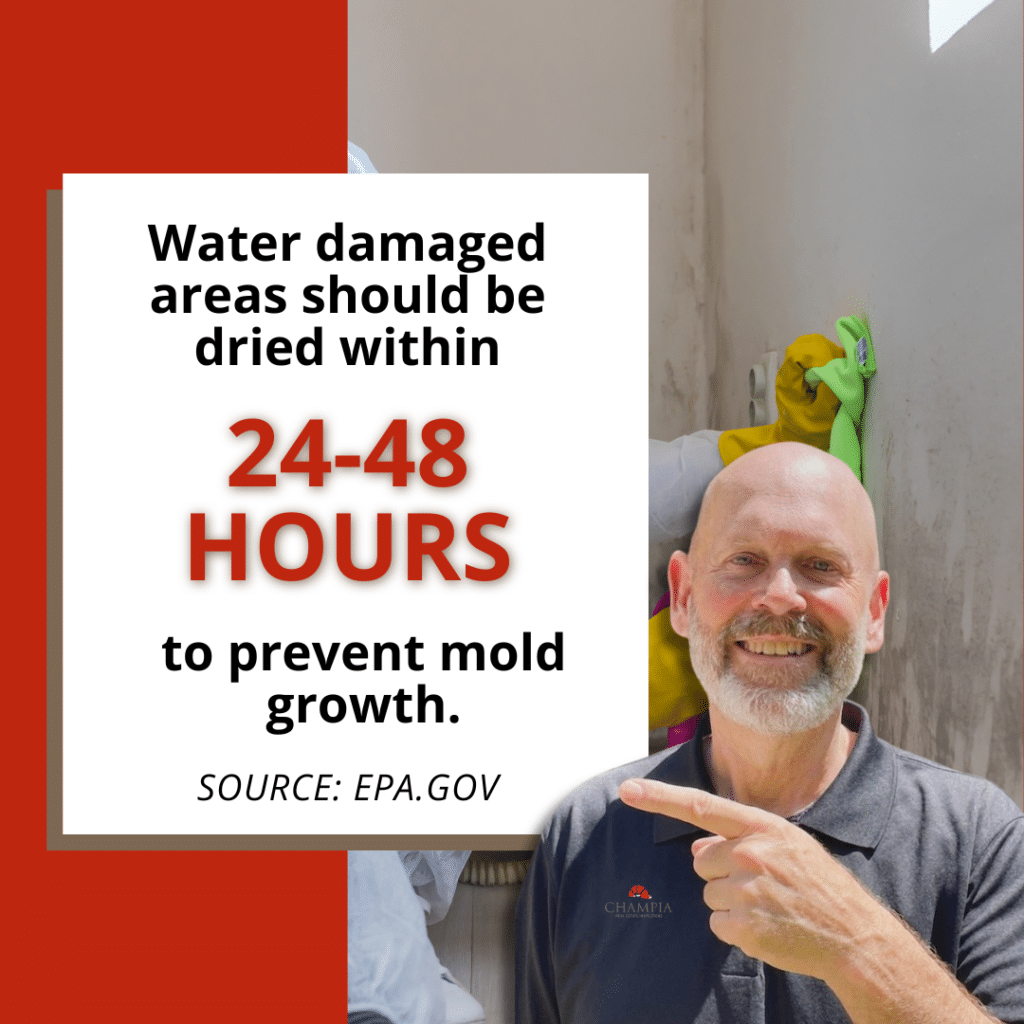
According to the EPA, water-damaged areas should be dried within 24 to 48 hours to prevent mold growth.
After that window closes, mold spores that are already present in the air can activate and begin spreading across wet surfaces.
Mold does not need a flood to get started. In fact, slow and hidden leaks are often more dangerous than sudden water events because they go unnoticed for so long.
A small drip behind a wall or under a sink can silently saturate drywall, wood framing, and insulation for weeks before anyone realizes there is a problem.
Here is how the timeline typically unfolds:
| Time After Water Exposure | What Is Happening |
| 0 to 24 hours | Moisture absorbs into porous materials like drywall and wood |
| 24 to 48 hours | Mold spores activate and begin colonizing wet surfaces |
| 3 to 7 days | Visible mold patches may begin to appear on walls, ceilings, and floors |
| 1 to 2 weeks | Mold colonies become embedded and difficult to remove without professional help |
| Beyond 2 weeks | Structural damage accelerates; remediation costs rise significantly |
The key takeaway here is that time is working against you from the moment water enters your home. So naturally, recognizing the early warning signs is critical.
Water Damage Mold Warning Signs Most Homeowners Overlook
Yes, you can have a serious water damage mold problem without seeing any obvious mold at all.
That is what makes this issue so tricky. Many of the earliest signs are easy to dismiss or misattribute to something else entirely.
Furthermore, because Atlanta homes frequently have crawl spaces, attics, and older construction materials, mold often develops in areas that are completely out of sight.
Here are the warning signs that homeowners most commonly miss.
A Musty Smell With No Visible Source
A persistent musty or earthy odor is often the very first sign of mold activity. If you notice a smell that lingers even after cleaning and airing out a room, that odor is likely coming from mold growth hiding somewhere behind a surface.
Do not ignore this one. A smell without a visible source almost always means the mold is concealed inside a wall, under flooring, or above a ceiling.
Staining, Discoloration, or Bubbling Paint
Yellow or brown rings on ceilings and walls are a classic indicator of past or ongoing moisture intrusion. Similarly, paint that is bubbling, peeling, or pulling away from the surface is telling you that water has been working its way through the material underneath.
These stains do not always look dramatic. Sometimes they are faint, barely noticeable discolorations in a corner or near a window frame. But they are worth investigating every time.
Warped or Buckling Floors
Hardwood and laminate floors that are starting to cup, buckle, or feel uneven underfoot have almost certainly been exposed to moisture. This is especially common near bathrooms, kitchens, and laundry rooms, where appliance or plumbing leaks are more likely.
Even if the surface looks dry now, the subfloor beneath could still be saturated and actively growing mold.
Allergy-Like Symptoms That Improve When You Leave Home
This one surprises a lot of people. If you or your family members are experiencing persistent sneezing, itchy eyes, headaches, or a runny nose, and those symptoms improve noticeably when you spend time away from home, mold exposure could be a contributing factor.
The EPA notes that molds produce allergens and irritants that can trigger reactions in sensitive individuals, including hay fever-type symptoms such as sneezing, runny nose, red eyes, and skin rash.
Children and elderly family members are particularly vulnerable to these effects.
Soft Spots or Sponginess in Walls and Floors
Press gently on a section of drywall or flooring that you are suspicious about.
If it feels soft, spongy, or gives more than it should, that is a strong indicator that moisture has been present long enough to break down the material.
By the time you can feel this kind of damage from the outside, the moisture problem is usually well established, and mold is very likely already present on the other side.
Small Mold Patches Dismissed as Dirt or Grime
Many homeowners spot a small dark patch in a corner, around a window, in grout lines, or near caulking, and assume it is just dirt or buildup. Sometimes it is.
But often, what looks like a minor surface stain is actually the visible edge of a much larger mold colony growing behind or beneath it.
If a dark spot does not wipe away cleanly or keeps coming back after cleaning, treat it as a mold warning sign rather than a cleaning issue.
Unexplained Spikes in Energy Bills
When HVAC systems develop moisture problems, including condensation buildup on coils or in ductwork, they lose efficiency fast.
If your utility bills have crept up without an obvious reason, it may be worth checking your HVAC system for moisture issues that could also be contributing to mold growth throughout your home’s air supply.
The Most Common Causes of Water Damage
Understanding where water damage typically comes from can help Atlanta homeowners stay ahead of the problem. Here are the most frequent culprits in this region.
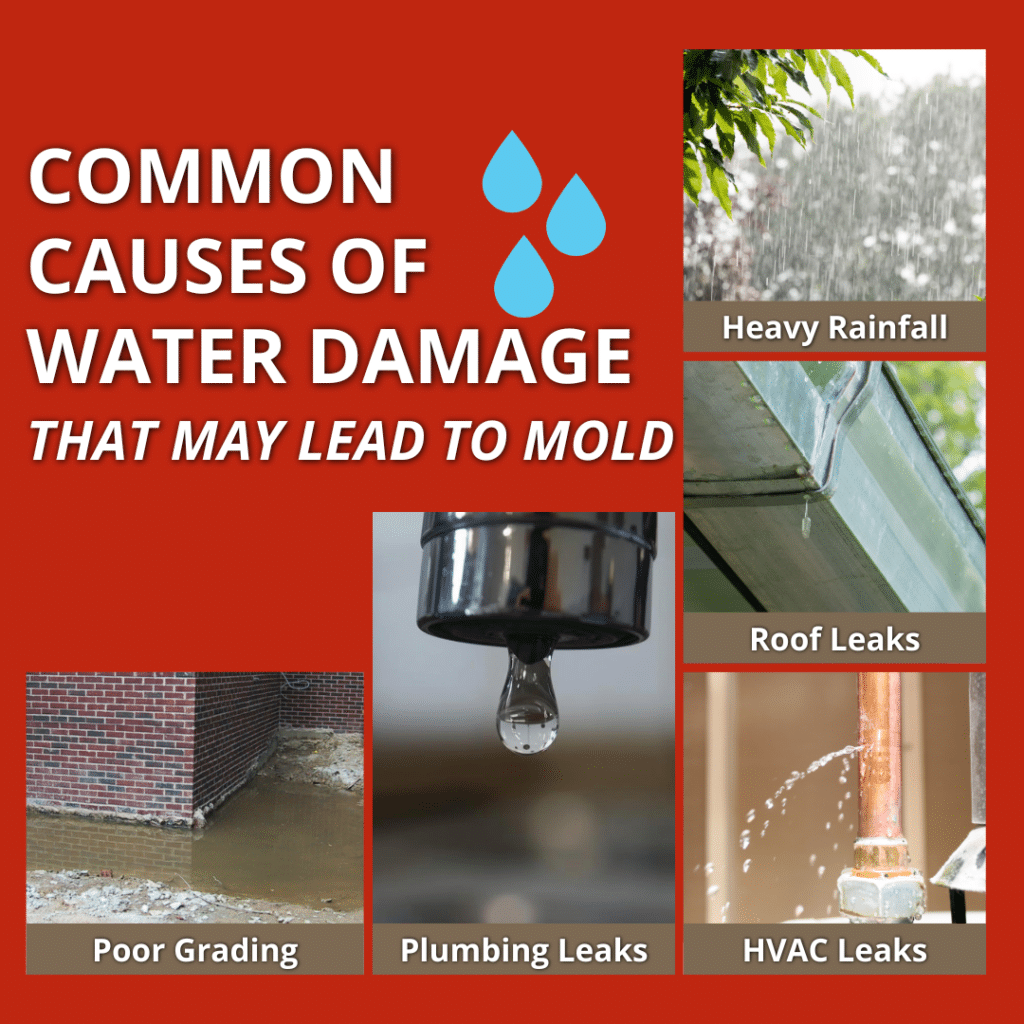
- Summer storms and heavy rainfall — Atlanta’s storm season regularly produces intense, fast-moving rain events that overwhelm gutters, drainage systems, and aging roof materials.
- Roof leaks and damaged flashing — Missing shingles and failed flashing around chimneys and skylights allow water to seep into attics and wall cavities quietly.
- HVAC condensation and drainage issues — In Atlanta’s hot and humid summers, air conditioning systems produce a significant amount of condensate. When drain lines clog or coils ice over, that moisture ends up where it should not.
- Slow plumbing leaks — Pinhole leaks in supply lines and drain pipes often go undetected for months, saturating wall cavities and subfloors well before any visible sign appears.
- Crawl space moisture intrusion — Many older Atlanta neighborhoods have homes built on crawl space foundations. Without proper vapor barriers and ventilation, ground moisture moves directly up into the home’s structure.
- Appliance leaks — Dishwashers, refrigerators with water lines, and washing machines are among the most common sources of slow, hidden leaks in kitchens and laundry rooms.
- Poor grading and foundation drainage — When the ground around a home slopes toward the foundation rather than away from it, rainwater pools against the structure and eventually works its way inside.
Where Does Mold Hide After Water Damage?
Mold rarely grows in plain sight. In Atlanta homes, especially, the places where water damage tends to occur are also the places where mold can grow completely undetected for extended periods of time.
The most common hiding spots include:
- Attics — Roof leaks and poor ventilation make attics one of the most overlooked mold zones in any home.
- Crawl spaces — Ground moisture and standing water create ideal conditions for mold to develop on floor joists and support beams.
- Behind drywall and baseboards — Slow plumbing leaks and exterior moisture intrusion saturate wall cavities that you cannot see from the surface.
- Under flooring — Water that seeps under hardwood, laminate, or tile can saturate the subfloor and grow mold for months before the surface shows any sign of damage.
- Inside HVAC ductwork — Condensation inside duct systems can spread mold spores throughout the entire home every time the system runs.
- Around windows and exterior doors — Failed seals and improper flashing allow water to collect in framing and insulation just behind the interior wall surface.
What Happens When Water Damage Mold Goes Undetected?
The longer water damage mold goes unaddressed, the more serious the consequences become. And unfortunately, because so many of the early warning signs are subtle, many Atlanta homeowners do not discover a problem until it has already done significant damage.
What Extended Mold Exposure Can Lead To
- Structural damage — Mold actively breaks down wood, drywall, and insulation. Over time, this weakens the structural integrity of floors, walls, and roof framing. Repairs become far more extensive and expensive the longer the problem continues.
- Health concerns — Prolonged exposure can contribute to chronic respiratory symptoms, sinus infections, and worsened asthma, particularly in children and older adults.
- Lower resale value — Mold discovered during a buyer’s home inspection can derail a sale entirely, trigger costly remediation demands, or significantly reduce the final sale price.
- Insurance complications — Many homeowner’s insurance policies limit or exclude mold coverage, especially when the underlying cause was a slow leak that went unreported. Acting quickly and documenting water damage thoroughly gives you a much better chance of a successful claim.
What a Home Inspection Reveals
A professional home inspection is one of the most reliable ways to detect water damage and mold before it becomes a major problem.
Champia Real Estate Inspections uses moisture meters, thermal imaging technology, and systematic visual inspection protocols to identify signs of water intrusion and mold activity that are not visible to the naked eye.
Thermal imaging, in particular, allows inspectors to detect temperature differences inside walls and ceilings that indicate moisture is present, even when the surface itself looks completely normal.
This gives buyers, sellers, and current homeowners a clear picture of what is actually happening behind the walls.
Standard home inspections look for visible and measurable evidence of moisture intrusion throughout the home.
When those findings suggest a higher risk of mold, Champia can recommend additional mold testing so you have the full picture before making any decisions.
Whether you are buying, selling, or simply maintaining your Atlanta home, a professional inspection gives you the information you need to act before a small moisture problem turns into a large mold remediation project.
Related Questions
Can you have water damage without visible mold?
Yes. In fact, this is very common. Mold frequently grows inside walls, under floors, and in crawl spaces where it cannot be seen from the surface. Odor, staining, and physical symptoms are often the only early clues.
What are the health risks of water damage mold in a home?
Mold exposure found during home inspections can cause allergic reactions, respiratory irritation, worsening asthma symptoms, and chronic sinus issues. Children, elderly individuals, and those with compromised immune systems are generally at higher risk.
How do I know if my Atlanta home has a hidden mold problem?
Look for musty odors, unexplained staining, warped surfaces, or allergy symptoms that improve when you leave home. The most reliable way to know for certain is through a professional home inspection with moisture detection tools and mold testing.
Should I get a mold inspection before buying a home in Atlanta?
If you notice any of the warning signs described in this post, or if the home has a crawl space, foundation, older plumbing, or any history of water damage, a professional inspection is strongly recommended before closing.
What is the difference between a home inspection and a mold inspection?
A standard home inspection looks for visible and measurable evidence of moisture intrusion, damage, and conditions that are likely to support mold growth. A dedicated mold inspection, or mold test, goes a step further by sampling the air or surfaces to identify specific mold types and concentrations. Champia can help you determine which level of inspection is appropriate for your situation.
Conclusion
Water damage mold rarely announces itself clearly. It hides behind walls, under floors, and in crawl spaces, often for months, before the signs become obvious enough to act on.
The good news is that early detection makes a significant difference. A professional home inspection gives you the information you need to address moisture problems while they are still manageable, rather than after they have escalated into something far more costly.
If you are buying or selling a home in Atlanta, or if you have noticed any of the warning signs covered in this post, the team at Champia Real Estate Inspections is here to help. Schedule your inspection today and find out exactly what is happening inside your home.