A light switch may seem like a small part of your home, but it plays a major role in electrical safety. When a light switch begins to fail, it often shows warning signs long before a serious issue occurs.
Knowing the signs you need to replace a light switch can help you prevent electrical hazards, protect your home, and avoid costly repairs or inspection delays.
This guide explains the most common warning signs, why they matter, and how professional home inspections help catch electrical problems early.
Why Light Switch Problems Should Not Be Ignored
Light switch problems can signal hidden electrical safety risks.
A malfunctioning light switch is more than a daily inconvenience. It can indicate overheating, loose wiring, or failing electrical connections inside your walls.
These problems often develop slowly and may not be obvious until a more serious issue occurs.
According to the National Fire Protection Association, electrical failures or malfunctions are involved in about 13% of home structure fires each year.
Many of these fires begin with small electrical defects that go unnoticed, including worn switches and loose connections.
Ignoring light switch problems can lead to:
- Increased fire risk
- Electrical shock hazards
- Damage to wiring behind walls
- Failed home inspections during a sale
Addressing these issues early helps protect both your home and the people living in it.
What Does a Light Switch Actually Do?
A light switch controls when electricity flows through a circuit.
When you flip a light switch, internal metal contacts either complete or break an electrical circuit. This allows electricity to reach the light fixture or stops the flow entirely. Each time the switch is used, those contacts experience wear.
Several factors affect how long a light switch lasts:
- Frequency of use
- Quality of installation
- Moisture exposure
- Age of the home and wiring
Most switches are designed to last 15 to 20 years, but failure can happen sooner, especially in high-use areas like kitchens, hallways, and bathrooms.
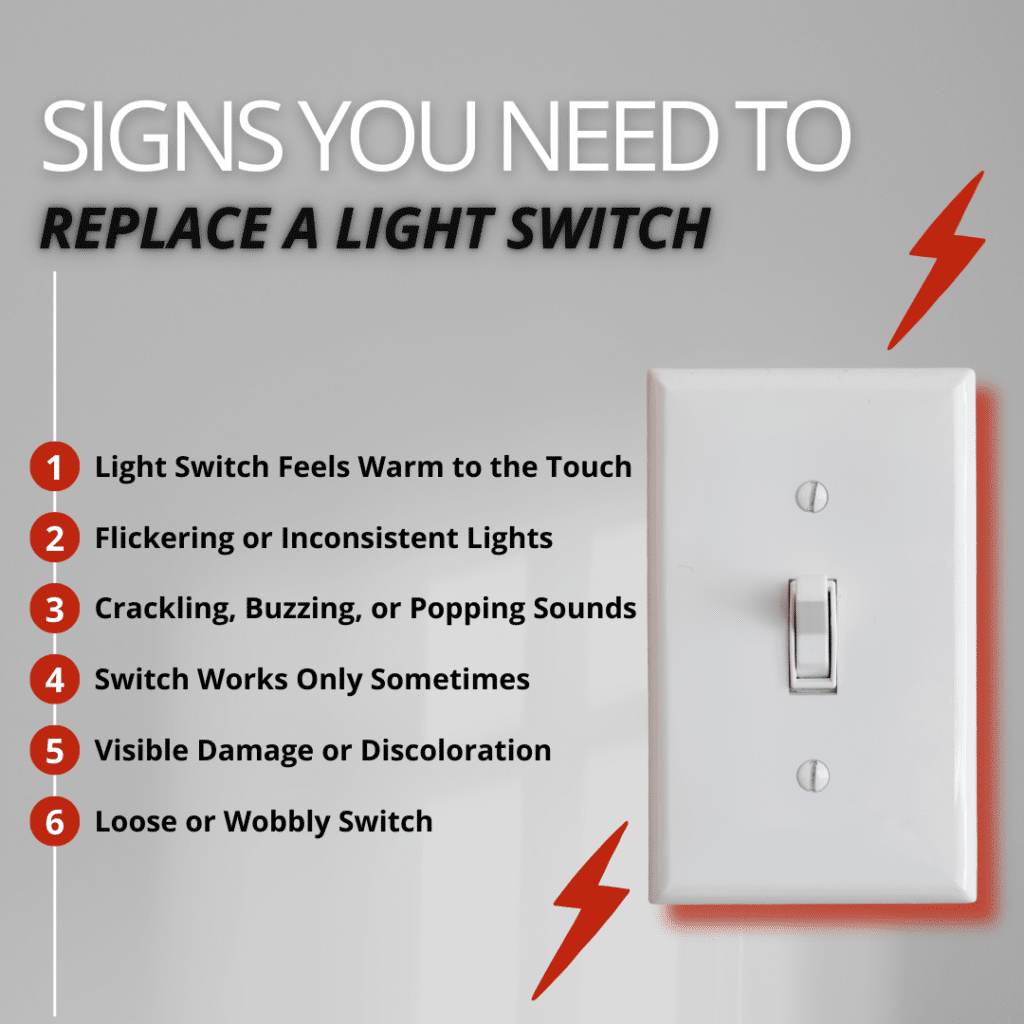
Signs You Need to Replace a Light Switch
These are the most common warning signs that indicate a light switch may be unsafe or failing.
1. Light Switch Feels Warm to the Touch
A warm switch suggests overheating or electrical resistance.
A light switch should never feel warm. Heat usually means electricity is not flowing properly through the switch. This can be caused by loose wiring, worn internal parts, or electrical arcing.
Warm switches are a common safety concern noted during home inspections because heat buildup can damage wiring insulation inside the wall.
2. Flickering or Inconsistent Lights
Flickering often points to a failing switch connection.
If replacing the bulb does not solve the flickering, the switch itself may be the problem. Worn internal contacts can interrupt the flow of electricity, causing lights to flicker or dim.
This issue often worsens over time and should not be ignored.
3. Crackling, Buzzing, or Popping Sounds
Noise from a light switch is a serious warning sign.
Light switches should operate silently. Sounds like buzzing or crackling indicate electrical arcing, which produces heat and damages wiring.
Arcing significantly increases the risk of fire and requires immediate professional attention.
4. Switch Works Only Sometimes
Intermittent operation means the switch is failing.
If a light only turns on when the switch is pressed a certain way, the internal components are likely worn or loose. These failures often progress quickly and can lead to overheating.
This is one of the most common electrical issues found during inspections.
5. Visible Damage or Discoloration
Visible damage often indicates past overheating.
Burn marks, cracks, yellowing, or melted plastic around the switch or faceplate suggest excessive heat has already occurred. These signs often point to wiring damage behind the wall as well.
Inspectors typically recommend immediate replacement when visible damage is present.
6. Loose or Wobbly Switch
A loose switch increases shock and fire risk.
A switch should feel secure in the wall. Movement may indicate a loose electrical box or wiring connections. Loose switches can expose live wiring and increase the risk of electrical shock or arcing.
How Moisture and Humidity Can Damage Light Switches
Moisture speeds up electrical failure.
High-humidity areas like bathrooms, kitchens, basements, and laundry rooms place extra stress on electrical components. Moisture can corrode metal contacts and weaken insulation, leading to premature failure.
Common Moisture-Related Warning Signs
- Rust on screws or faceplates
- Discoloration near the switch
- Frequent switch problems in humid rooms
During inspections, moisture-damaged switches are often found near poorly ventilated bathrooms or unfinished basements.
Why Replacing a Light Switch Is Important for Safety
Replacing a bad switch lowers fire and shock risk.
Faulty switches allow unstable electrical flow, which creates heat and stresses wiring. Over time, this can damage insulation and increase the risk of fire inside the wall.
Replacing a failing switch helps:
- Reduce fire hazards
- Improve electrical reliability
- Protect the surrounding wiring
- Support safer living conditions
How Replacing a Light Switch Can Prevent Bigger Electrical Repairs
Early replacement prevents costly electrical damage.
Small electrical issues often grow into larger problems when ignored. Heat and loose connections can damage wiring, junction boxes, or even breakers.
Cost Comparison Example
| Issue | Typical Repair Scope | Relative Cost |
| Worn light switch | Replace switch | Low |
| Loose wiring behind the switch | Rewire outlet box | Medium |
| Heat-damaged wiring | Circuit or panel repair | High |
Many inspection reports show that early electrical repairs save homeowners time, money, and stress.
When a Light Switch Becomes a Home Inspection Issue
Inspectors flag switches that present safety concerns.
During a home inspection, light switches are tested for proper operation and checked for visible damage. Common findings include:
- Non-functioning switches
- Loose or warm switches
- Burn marks or discoloration
Unresolved issues often become negotiation points during real estate transactions.
Should You Replace a Light Switch Yourself or Call a Professional?
Replacing a light switch should be avoided and handled by a professional.
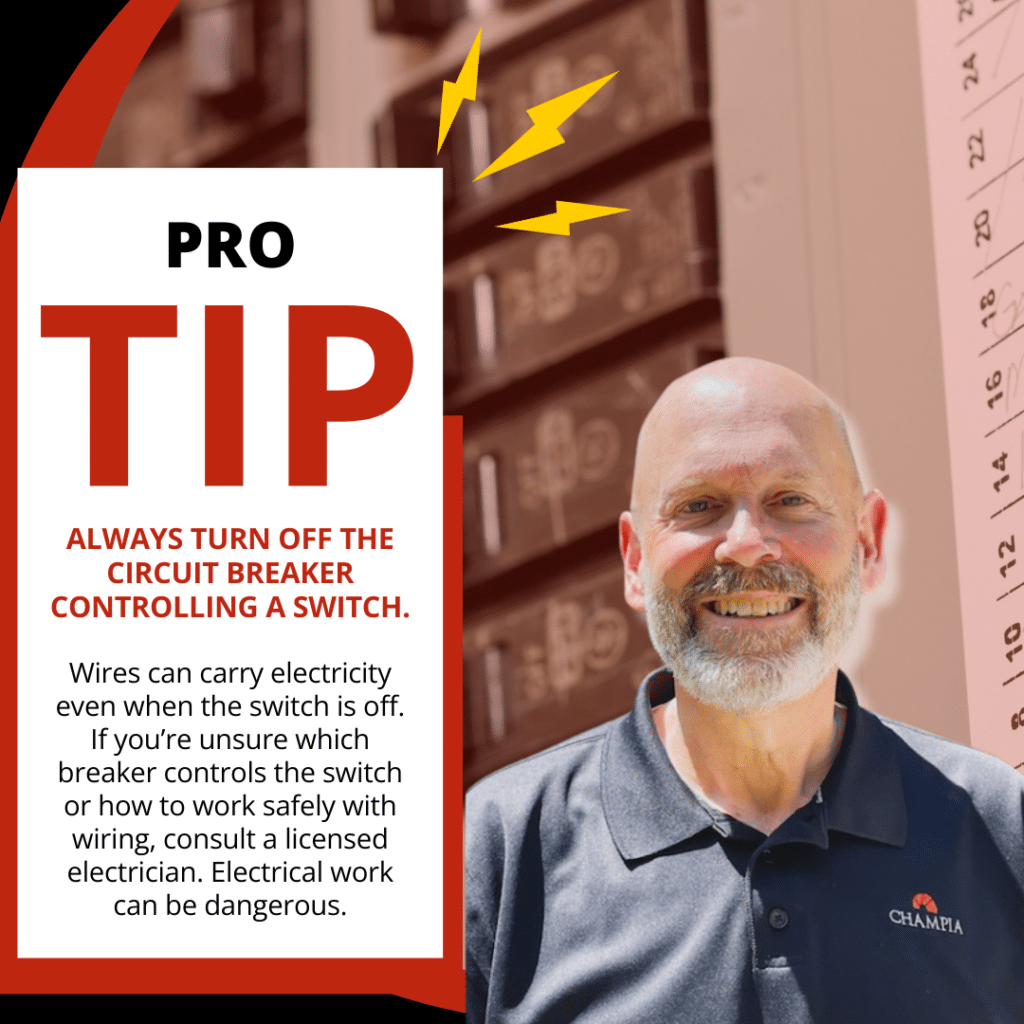
Although replacing a light switch is often portrayed as an easy DIY task, it should be avoided at all costs. Electrical work carries serious safety risks, including shock, fire, and improper installation.
Even when power is turned off, wiring mistakes can occur. Improper replacement can:
- Create hidden fire hazards
- Damage wiring behind walls
- Lead to failed inspections
- Cause insurance complications
A licensed electrician ensures the switch is replaced safely and correctly. Professional replacement protects your home and reduces long-term risk.
Light Switch Issues in Older Homes
Older homes face higher electrical risks.
Older homes may have outdated wiring or electrical systems that are not designed for modern electrical loads. Switches in these homes are more likely to fail or overheat.
Common risks include:
- Brittle insulation
- Loose connections
- Undersized electrical boxes
Professional inspections are especially important in older properties.
How a Home Inspection Helps Catch Electrical Issues Early
Inspections uncover hidden electrical risks before they turn into costly or dangerous problems.
A professional home inspection includes a detailed visual evaluation of accessible electrical components, including light switches, outlets, fixtures, electrical panels, and visible wiring.
Inspectors are trained to recognize warning signs that indicate unsafe or failing electrical conditions, even when the system still appears to function normally.
During an inspection, common electrical issues that may be identified include loose or non-functioning switches, signs of overheating, improper wiring connections, missing or damaged cover plates, and outdated components that no longer meet modern safety expectations.
These issues are often overlooked by homeowners because they may not cause immediate problems.
For Buyers
A home inspection helps uncover electrical concerns before finalizing a purchase. Identifying issues early allows buyers to plan for repairs, request corrections, or negotiate credits before closing.
This reduces the risk of unexpected repair costs after moving in.
For Sellers
Addressing electrical issues early can prevent inspection delays and renegotiations.
Simple repairs, such as replacing a faulty light switch, often improve inspection outcomes and buyer confidence, helping the transaction move forward more smoothly.
Overall, a professional home inspection provides peace of mind by helping homeowners make informed decisions and address small electrical problems before they escalate into emergencies.
Related Questions
Can electrical problems show up during a home inspection?
Electrical defects such as faulty fixtures, light switches, loose outlets, and panel issues are commonly documented during home inspections. These findings often help identify safety concerns that may require further evaluation.
What other electrical issues are common in residential homes?
Beyond light switches, inspectors frequently note problems with outlets, wiring connections, grounding, and outdated electrical panels, especially in older properties.
Do electrical issues affect real estate transactions?
Electrical concerns can influence negotiations, repair requests, and closing timelines. Even minor defects may raise questions for buyers during the inspection period.
How do moisture issues impact home electrical systems?
Moisture intrusion can damage wiring, outlets, and switches over time. Electrical components located in bathrooms, basements, or laundry areas are often more vulnerable.
Why are electrical issues more common in older homes?
Older homes may have aging wiring systems, outdated components, or materials that no longer meet modern safety standards, increasing the likelihood of electrical findings during an inspection.
Conclusion
Understanding the signs you need to replace a light switch helps protect your home and prevent serious electrical problems. Warm switches, flickering lights, unusual sounds, and visible damage should never be ignored.
If you are buying, selling, or maintaining a home, a professional inspection can help identify electrical concerns early and guide next steps.
If you have questions about electrical safety or are scheduling a home inspection, Champia Real Estate Inspections can help you understand your home’s condition and move forward with confidence.