
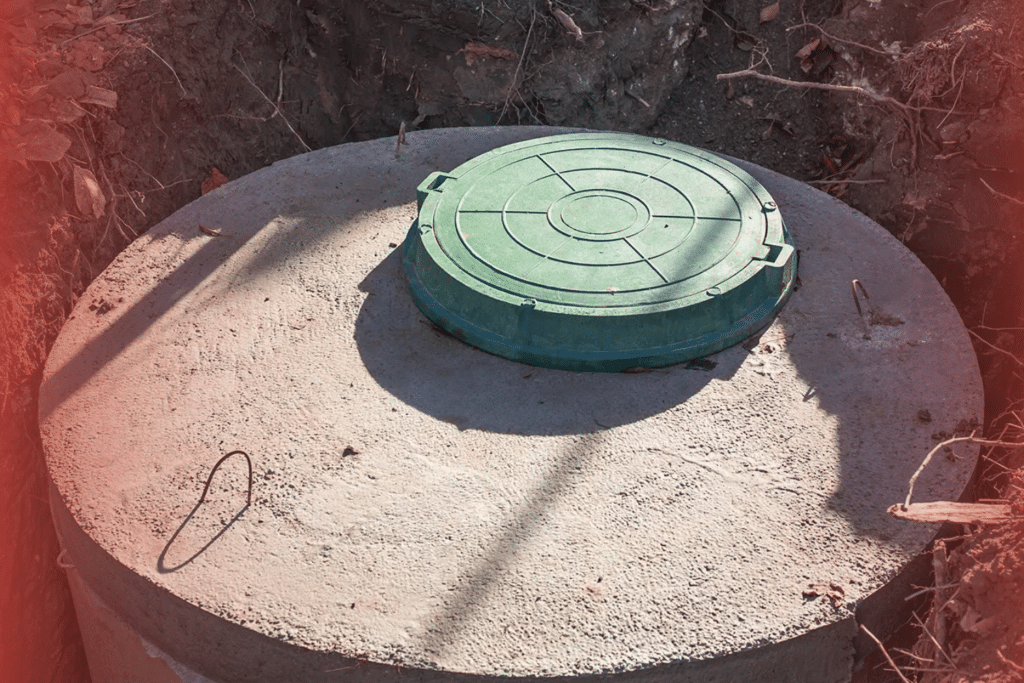
So you just moved into a home with a septic system. Congratulations on the new place! But now someone is asking you, “Where is your septic tank?” and you realize you have no idea.
You are definitely not alone. Knowing how to locate your septic tank is one of the most overlooked parts of moving into a home with a private septic system.
Fortunately, finding your septic tank is easier than it sounds. This guide walks you through every practical method, from checking your property records to spotting visual clues in your yard.
‘And if you still come up empty, we will tell you exactly when it makes sense to call in a professional.
What Is a Septic Tank and Why Does Its Location Matter?
A septic tank is an underground container that holds and treats wastewater from your home. Every time you flush, run the dishwasher, or take a shower, that water travels through your pipes and into the tank.
Naturally occurring bacteria inside the tank break down solids, and the liquid wastewater then flows out into a drain field, where the soil filters it further before it re-enters the ground.
Simply put, your septic system is doing a lot of quiet, important work beneath your yard every single day.
So why does knowing its location matter so much? Here are a few key reasons:
- Routine pumping requires direct access to the tank’s lid
- Digging or driving over the tank by accident can cause serious damage
- A backed-up or failing system can contaminate your yard, well water, and even neighboring properties
- Lenders, buyers, and home inspectors will ask about it during a future sale
In short, not knowing where your septic tank is buried creates real financial and safety risks that are easy to avoid once you know what to look for.
In fact, according to the U.S. Environmental Protection Agency, more than 21 million households across the country rely on septic systems, yet most homeowners are never told where the tank is buried or how it works.
How to Locate Your Septic Tank Using Your Property Records
The fastest and most reliable way to find your septic tank is to start with the paperwork. Before you ever step foot in your yard, check these sources first.
Check Your County Health Department Records
Most septic systems require a permit to be installed. That permit, along with an as-built drawing (sometimes called a site plan or installation diagram), is typically filed with your county health department or environmental services office.
This document will show you exactly where the tank is located on your property, how large it is, and where the drain field runs.
In Georgia, you can start by contacting your county’s Environmental Health Department. Many counties now offer online access to these records as well.
Review Your Property Disclosure and Inspection Report
If you received a home inspection before purchasing your home, go back and review that report carefully. A thorough inspection report often includes notes on the septic system’s location, condition, and access point.
Similarly, the seller’s property disclosure form may reference the system.
Champia Real Estate Inspections includes detailed system documentation in its inspection reports, which can give new homeowners a helpful head start when tracking down their septic records.
Ask Your Neighbors or the Previous Owner
If records are hard to find, consider reaching out to long-time neighbors or the previous owner. Older properties sometimes have systems that predate permit requirements, and a neighbor who has lived on the street for decades may know more about the area’s soil and septic history than any county database.

The Easiest Ways to Find Your Septic Tank in the Yard
Once you have reviewed your records, it is time to take a walk outside. Even without any paperwork, your yard itself can point you in the right direction.
Look for Visual Clues in the Grass
Nature has a way of giving things away. Keep an eye out for these common visual signals:
- A patch of noticeably greener or thicker grass, especially during dry months, often grows over the tank or drain field
- A slight rectangular mound or depression in the ground can indicate where the tank was buried
- In cold Georgia winters, a frost-free area in an otherwise frozen yard suggests warm gases escaping from below
- An unusually lush or wet area far from your garden hose can signal drain field activity
Follow the Main Sewer Line From Your House
Go to your basement or crawl space and find the main sewer pipe that exits the house. This pipe typically runs in a straight line from your foundation to the septic tank.
Most tanks are installed between 10 and 25 feet from the house, though older installations vary. Trace the direction of that pipe outside and mark where it heads.
What NOT to Do
As tempting as it may be to start digging once you have a general idea, please avoid the following:
- Never dig blindly with a shovel or mechanical equipment without confirming what is below
- Avoid driving heavy vehicles or equipment over any area where you suspect the tank or drain field is buried
- Do not probe too aggressively in the drain field area, as puncturing a distribution pipe is a costly mistake
Tools That Help You Find a Buried Septic Tank
If the visual approach does not give you a clear answer, there are several tools available that can help you narrow things down.
Soil Probes and Metal Rods (DIY Option)
A soil probe is a thin metal rod that you push into the ground to feel for a hard surface below. Septic tanks are typically made of concrete, fiberglass, or polyethylene, so they will create a distinctly firm resistance when you hit them.
This method works well if you already have a general idea of where to look and want to confirm the location without digging.
Electronic Pipe Locators
If your main sewer line is accessible, a plumber or inspector can run a small transmitter through the pipe. An above-ground receiver then tracks the signal and shows exactly where the pipe leads.
This is one of the most accurate DIY-friendly tools available, and many rental centers carry them.
Ground-Penetrating Radar
Ground-penetrating radar (GPR) is a professional-grade tool that sends electromagnetic pulses into the ground and maps what is below the surface.
This method works well for older properties where records are missing, and visual clues are unclear. However, it is typically used by professional inspectors and comes at a higher cost.
What to Do Once You Have Located Your Septic Tank
Great news. You found it. Now the next step is just as important as finding it in the first place.

Mark and Record the Location Permanently
Before you walk away, take a moment to document what you found. Here is what we recommend:
- Place a permanent marker or landscaping flag near the access lid
- Record GPS coordinates on your phone or a home management app
- Sketch a simple hand-drawn map showing the tank’s distance from the house, fence line, or other fixed landmarks
- Take a photo and save it to a dedicated home documents folder
Check the Area for Warning Signs
While you are there, take a quick look around the access area. Specifically, check for:
- Soft, spongy, or wet ground near the tank or drain field
- Visible sewage odors or surfacing liquid
- A cracked, sunken, or damaged lid
If you notice any of these signs, do not delay. Contact a professional immediately, as these can indicate a system that needs urgent attention.
Store Your Septic Records in One Place
Finally, add your new documentation to your home records file alongside your inspection report, permit, and maintenance history. Staying organized now will save you a significant amount of time the next time a plumber, pumping service, or inspector asks about your system.
When to Call a Professional to Locate Your Septic Tank
Sometimes the DIY approach just does not cut it, and that is completely okay. Here are the situations where bringing in a professional is the smartest move:
- Your property has no permit records, and the previous owner left no documentation
- The lot is large, heavily wooded, or has a complex layout that makes visual searching unreliable
- You suspect the system may be older or non-standard, based on the age of the home
- You are buying the home and want an objective inspection before you close
- You have tried the DIY methods and still cannot find the tank
A professional septic inspection goes well beyond just locating the tank.
A qualified inspector will also assess the system’s condition, test the inlet and outlet baffles, check the drain field for signs of failure, and document everything in a written report.
Skipping this step before purchasing a home is one of the most common and expensive mistakes buyers make. Septic system repairs can easily run into the thousands, and a failed system may not always be obvious from the surface.
What New Homeowners Should Know About Septic Inspections
If you recently purchased a home with a septic system, scheduling a professional inspection early is one of the best decisions you can make. Here is what to expect from the process.
What a Septic Inspection Includes
A comprehensive septic inspection typically covers the following:
- Locating and accessing the tank
- Measuring the sludge and scum layers to assess pumping needs
- Inspecting the inlet and outlet baffles for damage or deterioration
- Evaluating the drain field for signs of saturation, pooling, or failure
- Documenting all findings in a detailed written report
How Often Should You Schedule an Inspection After Moving In?
For most homes, a septic inspection every three to five years is a reasonable baseline. However, if you moved into a home with no recent inspection history, starting fresh with a thorough evaluation is strongly recommended, regardless of when the last one may have occurred.
Questions to Ask Your Septic Inspector
- When was the last time this tank was pumped?
- Are the baffles in good condition?
- Are there any signs of drain field stress or failure?
- What is the estimated remaining lifespan of this system?
- Are there any code compliance concerns I should know about?
Champia Real Estate Inspections serves homeowners and buyers across the Atlanta metro area and throughout Georgia. Their licensed inspectors bring local expertise and a thorough, easy-to-understand reporting process that helps new homeowners feel confident about the systems beneath their feet.
How to Keep Your Septic System Healthy After You Move In
Once you have located your tank and scheduled your inspection, the next step is building good habits that protect the system for the long haul.
Fortunately, septic maintenance is not complicated. It mostly comes down to being mindful about what goes down your drains and staying on a consistent pumping schedule.
Follow a Regular Pumping Schedule
How often you need to pump depends on your household size and tank capacity. Use the table below as a general guide:
| Household Size | Tank Size (Gallons) | Pump Frequency | Annual Water Use |
| 1-2 people | 1,000 | Every 4-5 years | Low |
| 3-4 people | 1,000-1,500 | Every 3-4 years | Moderate |
| 5-6 people | 1,500-2,000 | Every 2-3 years | High |
| 6+ people | 2,000+ | Every 1-2 years | Very High |
Watch What Goes Down the Drain
Your septic system relies on a healthy balance of bacteria to break down waste. Certain household products actively destroy that balance. Avoid flushing or draining the following:
- Wipes of any kind, even those labeled “flushable.”
- Grease, cooking oils, and food scraps
- Harsh chemical cleaners, bleach, and antibacterial soaps in large quantities
- Medications
- Cat litter, paper towels, and feminine hygiene products
Protect the Drain Field
The drain field is just as important as the tank itself. To protect it effectively:
- Never park vehicles or heavy equipment over the drain field
- Avoid planting trees or deep-rooted shrubs near the system, as roots can infiltrate and damage pipes
- Direct surface water runoff away from the drain field area
- Keep the area clear of structures, sheds, and garden beds
Know the Warning Signs
Catching a problem early can mean the difference between a simple fix and a full system replacement. Watch for these signs:
- Slow drains throughout the house
- Gurgling sounds from toilets or clogged sinks
- Sewage odors indoors or near the tank area
- Unusually wet or lush patches of grass above the drain field
If you notice any of these warning signs, act quickly. The sooner you address a developing issue, the less costly it tends to be.
Related Questions
How deep is a septic tank buried?
Most septic tanks are buried between 4 inches and 4 feet below the surface, though the exact depth depends on local codes, soil conditions, and the age of the installation. The access lid is typically closer to the surface, often just a few inches down, to allow for easier pumping and maintenance during septic inspections.
Can I locate my septic tank myself?
Yes, in many cases you can. Start with your county records to find permit documents or an as-built drawing. From there, look for visual clues in the yard and follow the sewer line from your home’s foundation. Tools like soil probes can help confirm the location. However, if the property has no records or the system is older, a professional inspection is the safer and more reliable option.
What happens if I accidentally damage my septic tank?
Accidentally damaging the sewer line, tank, or its pipes, often by driving over the area or digging without confirming what is below, can result in cracked lids, broken inlet or outlet pipes, or structural damage to the tank itself. Repairs can range from a few hundred dollars for a lid replacement to several thousand for a full tank repair or system overhaul. This is exactly why locating and marking your tank early is so important.
How often should a new homeowner pump their septic tank?
Most experts recommend pumping every three to five years for an average household. However, if you just moved into a home and do not know the last time the tank was pumped, schedule a service call soon, regardless of the timeline. Starting fresh with a clean, inspected system gives you a reliable baseline to work from.
Conclusion
Now that you know how to locate your septic tank and what to do once you find it, the next step is getting a professional set of eyes on the full system. A thorough septic inspection gives you peace of mind, a clear record of your system’s condition, and an early warning if anything needs attention.
Champia Real Estate Inspections serves homeowners and buyers across Atlanta and throughout Georgia. Whether you are settling into a new home or preparing one for sale, their licensed inspectors are ready to help you feel confident about every inch of the property.