
When you buy a home or a commercial building, you want to know exactly what you are paying for. A standard visual inspection is a great start, but it cannot see through finished surfaces.
This is where a thermal imaging inspection becomes a game-changer for property owners in Georgia and Michigan. At Champia Real Estate Inspections, we use advanced technology to help you see hidden issues that are invisible to the naked eye.
Whether you are looking at a historic home in the Virginia Highland area of Atlanta or a commercial warehouse in Detroit, the environment is constantly working against the building.
Moisture, heat, and cold all leave a thermal footprint. By capturing these temperature differences, our inspectors can identify hidden problems without damaging the drywall or flooring. This allows for non-destructive inspections from a safe distance without dismantling equipment or cutting holes in walls.
What Is a Thermographic Inspection?
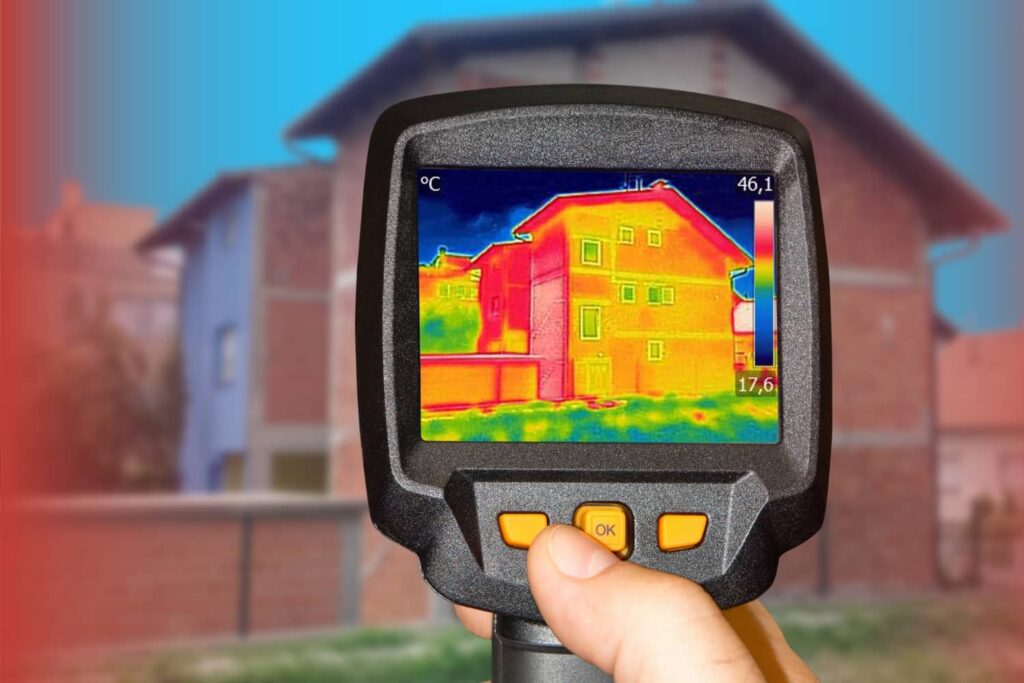
A thermal imaging home inspection is a non-invasive method of detecting temperature variations on the surfaces of a building. Every object emits infrared radiation.
While the human eye cannot see this energy, a thermal camera can. It converts that heat energy into a visual map of colors. This allows us to create thermal images that visualize issues like water leaks or insulation issues.
It is important to understand that these cameras do not see through walls like an X-ray. Instead, they show us the surface temperatures. If there is a cold spot in the middle of a warm ceiling, it usually indicates water intrusion or missing insulation behind that spot.
Using thermal imaging can yield cost reductions of 30-40% over reactive repairs by addressing minor issues before they become costly repairs.
How the Thermal Inspection Process Works
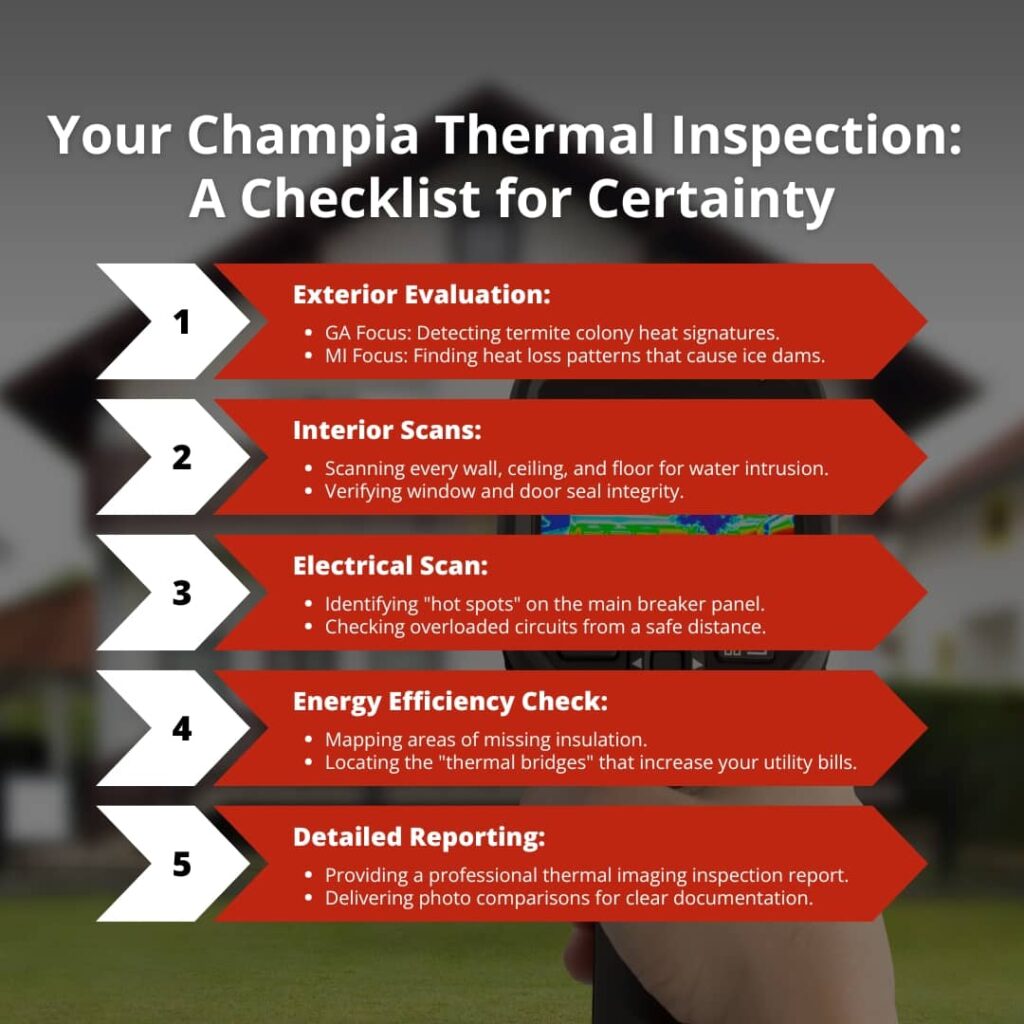
The inspection process involves passing a high-quality infrared camera over the surfaces of the interior and exterior walls, ceilings, and floors. We scan all accessible areas of the property to detect anomalies.
For the most accurate temperature readings, we look for a significant difference between the indoor and outdoor temperatures.
Our inspectors also use specialized tools like a thermal line scanner to measure radiant temperature along a specific path. This provides detailed thermal data for identifying insulation deficiencies or hot spots.
To ensure accuracy, we maintain high-quality calibration equipment to provide a stable reference for every scan. After the walk-through, we use thermographic software to process and analyze the captured data, which allows us to create a detailed thermal imaging report.
Finding Hidden Moisture and Plumbing Leaks
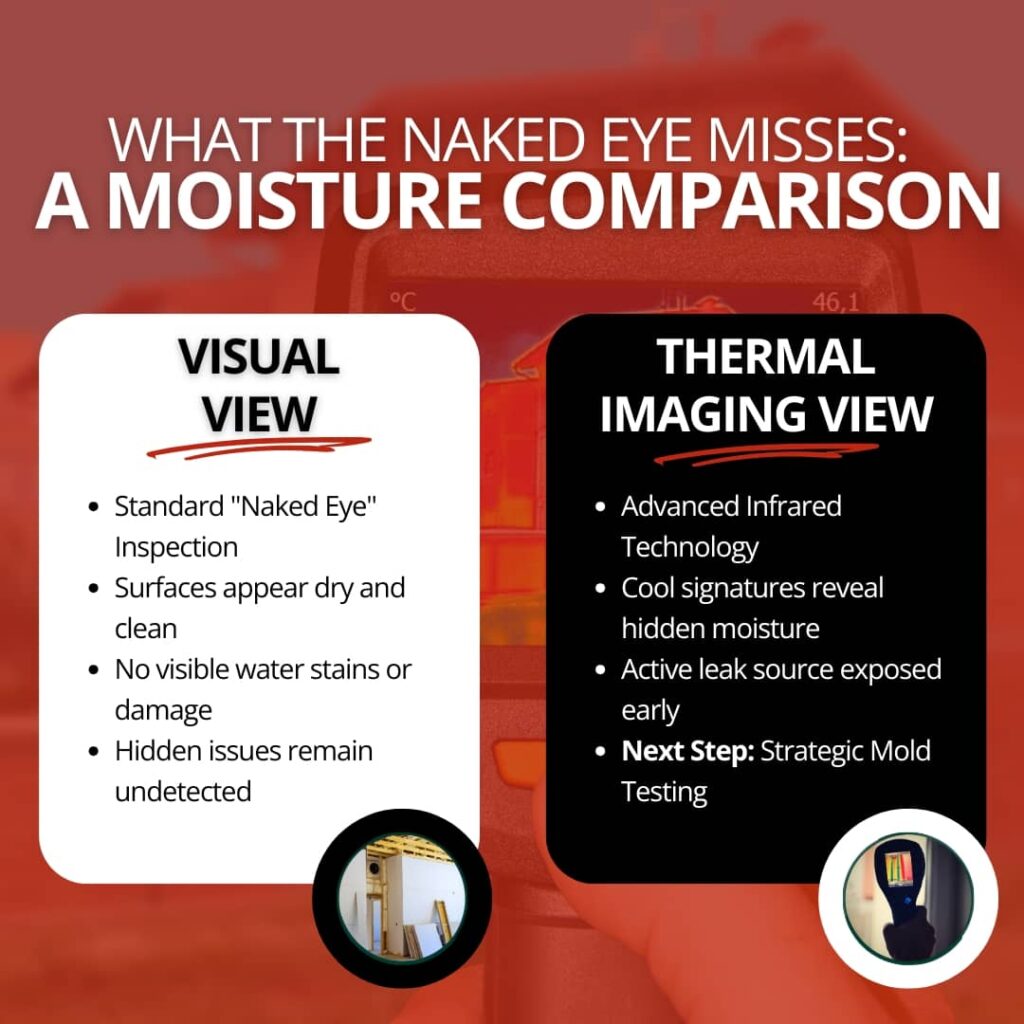
Water leaks are the second most common insurance claim in the United States. A thermal imaging inspection is the best way to find water intrusion long before it becomes a visible stain. Because moisture absorbs heat energy differently than wood or drywall, it shows up as a distinct cool signature on our cameras.
We can track hidden plumbing leaks from a second-floor bathroom in an Alpharetta home all the way through the subfloor. This helps us narrow down the source, whether it is a pinhole leak in a pipe or a failing seal around a window.
When we find these cold spots, we often use a moisture meter to confirm that the area is actually wet. This prevents false positives and gives you a detailed overview of the problem. If moisture is present, we may suggest a mold test to ensure your air quality is safe.
Detecting Faults in Electrical Systems
Electrical systems are a leading cause of house fires. Many of these problems start in the breaker panel, where they are invisible. Overloaded circuits and loose wires generate heat energy before they ever spark a flame.
Safety and risk reduction are enhanced because thermal imaging enables us to inspect energized electrical components from a safe distance.
During an infrared scanning session, we check the panel while it is under a normal load. If a breaker in your panel in Marietta or Detroit is glowing bright white on our screen, it means that component is overheating.
These hot spots are clear warning signs of electrical faults. By catching these early, you can have an electrician make a targeted repair. In many regions, annual infrared inspections for all electrical equipment are a requirement for commercial building safety.
Evaluating Energy Efficiency and Air Leaks
Most homeowners in places like Forsyth County, Georgia, or Novi, Michigan, notice high utility bills but do not know the cause. Often, the builder missed a section of insulation, or the home has developed air leaks over time. A thermal scan provides a complete map of your home’s thermal envelope.
| Problem Area | Thermal Appearance | Impact on Property |
| Missing Insulation | Large purple or dark blue patches | Energy loss and high utility costs |
| Thermal Bridges | Continuous lines of heat transfer | Reduced energy efficiency |
| Air Leakage | “Spidery” cold or hot lines | Drafty rooms and HVAC strain |
| Heat Loss | Bright yellow/white exterior spots | Money “leaking” out of the building |
We use the camera to look for thermal bridges, which are spots where the outdoor temperature transfers directly into your home through the framing. Detecting these insulation issues allows for necessary repairs to reduce energy costs.
For a deeper dive, we sometimes use a blower door test alongside the thermal camera to pull air through every crack in the building.
Strategic Value for Commercial and Mechanical Systems
For commercial real estate, preventative maintenance is essential. Thermal imaging is used to identify overheating motors, bearings, and mechanical systems. Excessive friction in a motor will show up as an intense heat signature on a FLIR camera before the machine fails.
Commercial roofs are also prime candidates for infrared thermography inspection. Flat roofs can trap moisture in the insulation layer. By performing a scan at night, we can see exactly where the moisture issues are located.
Instead of replacing the entire roof, a buyer can negotiate for the repair of only the damaged sections. This can save a business owner in Buckhead or Royal Oak tens of thousands of dollars
Understanding the Thermal Imaging Inspection Report
After we create thermal images and analyze the data, you receive a comprehensive thermal imaging inspection report. This document is more than just a collection of pretty colors. It is a professional tool that compares historical data and current findings.
The report includes side-by-side photos. One is a standard digital photo, and the other is the infrared image. This makes it easy for you to show a contractor or a seller exactly where the significant damage or air leaks are located.
These imaging inspection reports are often an additional cost on top of a standard home inspection, with some companies charging around $265 for this specialized service.
Other Related Questions
Does thermal imaging detect mold growth?
An infrared camera does not see mold spores, but it identifies the moisture patterns that mold needs to thrive. If a scan reveals cold spots behind a wall, a professional mold test is the best next step to confirm if the air quality has been compromised.
Can infrared cameras find leaks in sewer lines?
While thermal imaging can sometimes show temperature changes in the soil from a large leak, it cannot see inside the pipes. To find cracks or blockages in the waste lines of older homes, a sewer scope inspection is the most reliable method.
Is a radon test necessary if I get a thermal scan?
Yes, because radon is a colorless, odorless gas that does not have a heat signature. Since radon is a common concern across many Georgia and Michigan counties, a dedicated radon testing service is the only way to ensure the gas isn’t entering your living space through the foundation.
How does thermal imaging assist with termite detection?
In some cases, large termite colonies generate enough metabolic heat to be detected by a sensitive infrared camera. This technology serves as an excellent supporting tool during a termite inspection to help locate hidden activity within wall cavities that the naked eye might miss.
Can you use thermal imaging to inspect a pool or spa?
Yes, infrared scans are often used during pool and spa inspections to find leaks in the plumbing or shell. The camera detects temperature differences in the surrounding deck or soil, which can pinpoint exactly where water is escaping.
Why is thermal imaging important for commercial buildings?
For commercial properties, thermal scans are vital for checking flat roofs for trapped moisture and scanning large electrical panels for overheating. Regular thermographic checks are a key part of preventative maintenance that helps business owners avoid sudden system failures.
When to Call a Professional
Interpreting thermal images requires a high level of training and quality control. It is easy for an amateur to mistake a reflection in a window or a shadow from furniture for a major leak.
A professional home inspector understands how to account for environmental factors that might change a temperature reading.
If you are buying a home or managing a commercial property in the Atlanta or Detroit metro areas, you need a team with the right inspection tools. At Champia Real Estate Inspections, our team is trained to use thermographic software and cameras to give you the most accurate results possible.
Conclusion
A thermal imaging inspection is the most effective way to get a clear look at the hidden health of a building. It removes the guesswork from the home inspection and gives you the facts about water leaks, electrical systems, and energy loss.
Whether you are a first-time buyer in Gwinnett County or an investor in Ann Arbor, this technology provides the clarity you need.
Don’t let hidden problems become costly repairs that happen overnight. Contact Champia Real Estate Inspections today to schedule your infrared scan. From Fulton County to the metro Detroit area, we are ready to help you protect your investment with the latest thermal imaging technology.