
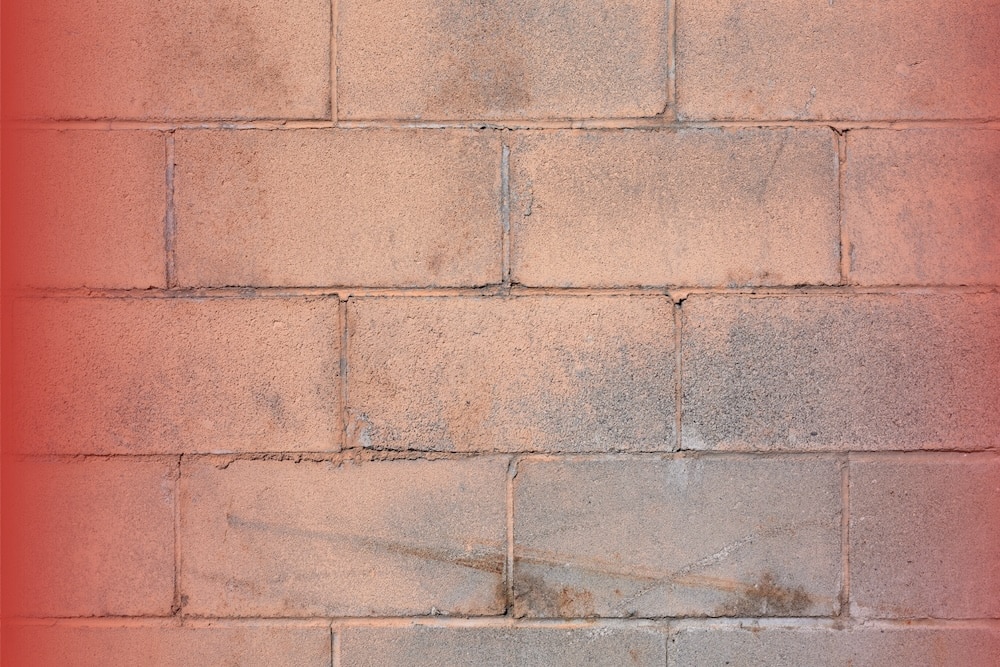
A weep hole is a small opening at the bottom of a brick wall or window frame that lets trapped water drain out and lets air move behind the wall. Those little gaps between bricks near your foundation are not missing mortar. They are there on purpose.
At Champia Real Estate Inspections, our inspectors have checked brick homes around Atlanta and Ann Arbor since 1987. Blocked or missing weep holes are one of the most common exterior issues we find, and most homeowners have no idea the holes exist.
This guide goes beyond “what is a weep hole” to cover what weep holes do, where to find them, what the building code requires, and how to keep them working.
What Does a Weep Hole Do?
A weep hole gives water a way out. Brick looks solid, but it soaks up rain like a hard sponge. Some of that water passes through the brick and runs down the back side.
In most brick homes, the brick is a thin outer layer called brick veneer. Behind it sits an air gap of about an inch, then a water barrier and the wood framing of the house.
Water that gets through the brick runs down this gap until it hits a strip of flashing near the bottom of the wall. The flashing steers the water outward, and the weep holes let it drain out.
Weep holes do two jobs:
- Drainage. Water leaves the wall cavity instead of pooling against the framing.
- Ventilation. Air moves in and out of the gap, which helps the back of the brick and the sheathing dry after a storm.
Without weep holes, water has nowhere to go. It sits at the base of the wall, where it can lead to wood rot, mold, and water stains inside the home.
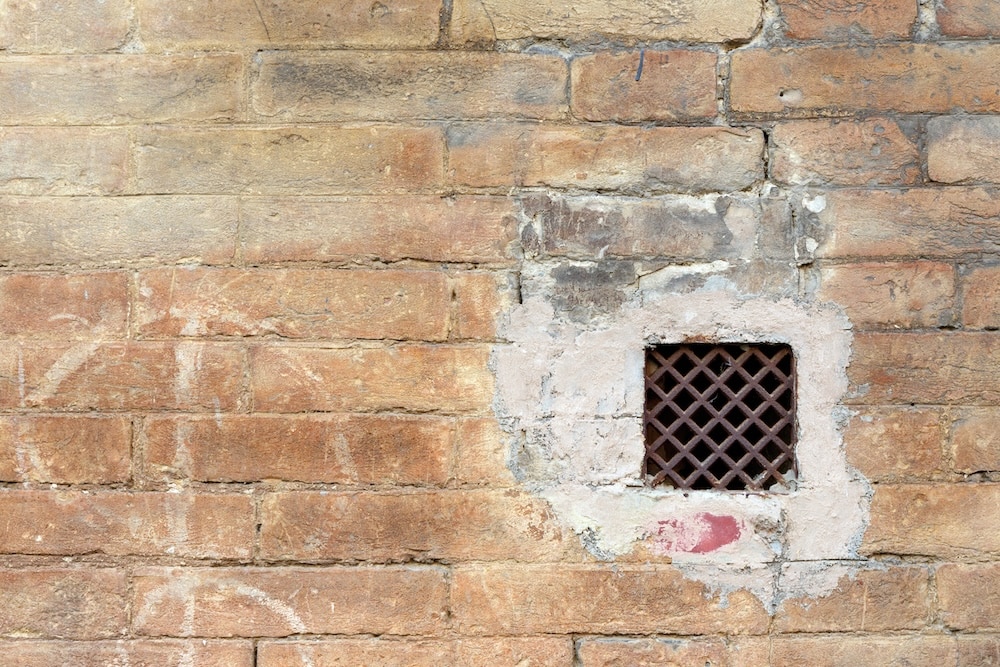
Where You’ll Find Weep Holes on a House
You’ll find weep holes anywhere a wall or frame needs to shed water it can’t keep out. Here are the four places they show up most.
Brick and Stone Veneer Walls
This is what most people mean by weep holes. Look at the bottom row of brick, just above the foundation or slab. You’ll often see small gaps in the vertical mortar joints every few bricks. You should also find weeps above windows and doors, below window sills, and anywhere flashing sits in the wall.
Windows and Sliding Doors
Vinyl and aluminum windows have window weep holes too. These are small slots on the outside of the bottom frame, sometimes with a tiny flap.
Rain that gets into the sill track drains out through them. Sliding glass doors work the same way.
Stucco Walls (Weep Screeds)
Stucco homes use a weep screed instead of holes. It’s a metal or plastic strip along the bottom edge of the stucco that lets water drain out. It’s a different part, but it does the same job.
Retaining Walls
Retaining walls in yards often have weep holes or pipes near the base. These relieve water pressure that builds up in the soil behind the wall. If that pressure has no release, the wall can lean or crack.
| Location | What It Looks Like | Main Job | Common Problem |
|---|---|---|---|
| Brick veneer wall | Gaps in vertical mortar joints near the base | Drain the wall cavity | Buried by mulch or soil |
| Window frame | Small slots on the outside of the bottom frame | Drain the sill track | Clogged with dirt or caulked shut |
| Stucco wall | Metal or plastic strip at the base | Drain behind the stucco | Too close to the ground |
| Retaining wall | Holes or pipes near the bottom | Relieve soil water pressure | Clogged with soil or roots |
Types of Weep Holes in Brick
Not all brick weep holes look the same. The Brick Industry Association’s Technical Note 7 describes several types:
- Open head joints. A vertical mortar joint is left empty. This is the preferred type because it drains best. The BIA recommends spacing them no more than 24 inches apart.
- Rope or wick weeps. A cotton rope sits in the joint and pulls water out. These should be at least 16 inches long and spaced no more than 16 inches apart.
- Tube weeps. A small plastic tube sits in the joint. The BIA does not recommend these because they clog easily.
- Vents and screens. Plastic or metal inserts fit into open joints. They keep out bugs and debris while letting water and air pass.
If your home has tube weeps, pay extra attention to them. They are the most likely to stop working.
What Does the Building Code Say About Weep Holes?
The International Residential Code requires weep holes in brick and stone veneer walls. Section R703.8.6 says weep holes must be:
- Spaced no more than 33 inches apart, center to center
- At least 3/16 inch in diameter
- Placed right above the flashing
Keep in mind that 33 inches is the code minimum. Brick experts recommend tighter spacing for better drainage.
For stucco, the code (Section R703.7.2.1) says the weep screed must sit at least 4 inches above soil or 2 inches above paved areas like a patio or driveway.
Local building departments adopt the code on their own schedule, so exact rules can vary by city and county.
What Home Inspectors Look for Around Weep Holes
During a home inspection, the inspector checks whether the wall can still drain. On a brick home, a Champia inspector will look for:
- Missing weep holes. Some older homes were built without them, and some newer homes were built with too few.
- Buried weeps. Mulch, soil, pavers, or a raised flower bed can cover the bottom row of brick. Once the weeps are underground, water can flow into the wall instead of out.
- Caulked or mortared weeps. Past owners sometimes fill the holes, thinking they’re defects.
- Missing or short flashing. Weeps only work if flashing sits behind them to direct the water out.
- Signs of trapped water. White staining on the brick, damp spots, or water damage inside near the baseboards.
- Window weep holes that are clogged or sealed with caulk.
InterNACHI’s guide to inspecting brick veneer also notes that mortar dropped into the air gap during construction can block weeps from the inside. That’s hard to see from the outside, so inspectors watch for the water stains it leaves behind.
Grading and gutters matter here too. Poor drainage around the house sends more water toward the wall. Our guide on how to keep rain from ruining your home covers the basics, and this list of common rain gutter defects shows what to watch for overhead.
Signs Your Weep Holes Aren’t Working
You can often spot weep hole problems from the yard or inside the house. Watch for these signs:
- White, chalky stains on the brick (called efflorescence). This means water is moving through the brick and leaving salts behind.
- Water stains or soft drywall near the floor on exterior walls.
- A musty smell in rooms along brick walls.
- Peeling paint or swollen trim near the base of the wall.
- Water sitting in window sill tracks after it rains.
- Cracked or flaking brick near the bottom of the wall. In Michigan, water trapped in brick freezes and expands each winter, which can break the face off the brick over time.
Mortar trouble can also point to moisture. This post on new mortar cracking between bricks explains what causes it.
Seeing any of these signs at your home? A Champia inspector can check your brick, flashing, windows, and grading in one visit. Learn more about our home inspections in metro Atlanta or our Ann Arbor home inspection services.
Should You Cover or Seal Weep Holes?
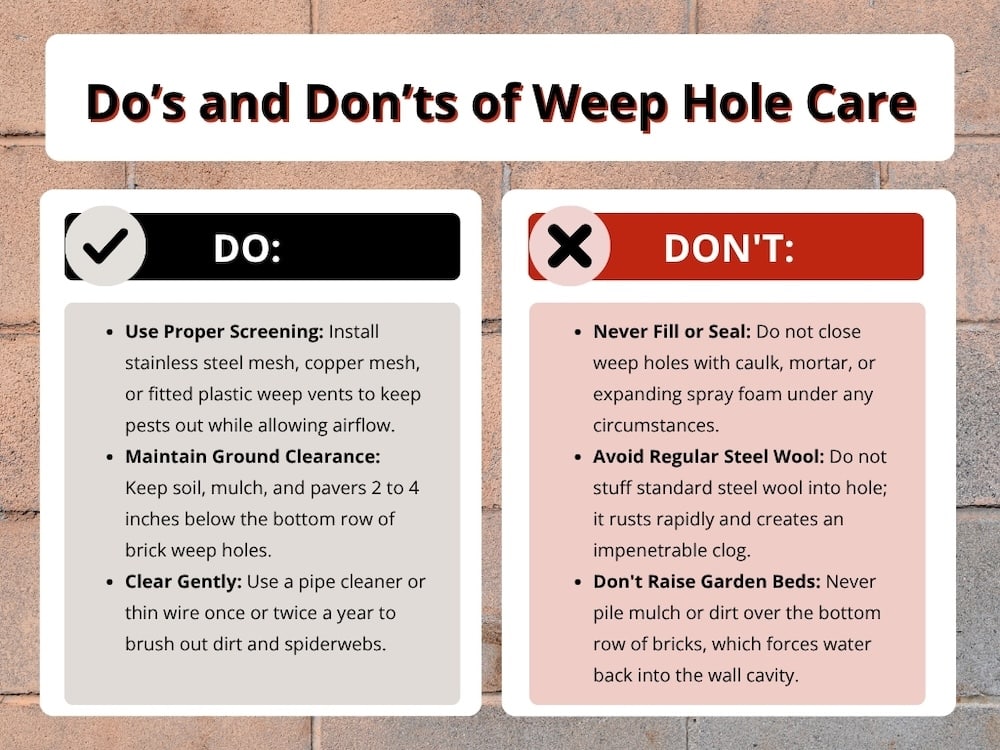
No. Never seal weep holes with caulk, mortar, or expanding foam. Sealing them traps water inside the wall, which is the exact problem they were built to prevent.
It’s fair to worry about bugs, though. In Georgia, where termites, ants, and other pests are active much of the year, an open gap in the brick can look like an invitation.
The fix is to screen the holes, not close them:
- Use plastic weep hole vents made to fit into the joint.
- Use stainless steel or copper mesh, which won’t rust.
- Avoid regular steel wool. InterNACHI notes that it rusts and ends up blocking the opening completely.
Any cover you choose should still let water and air pass freely.
How to Clean Weep Holes
Cleaning weep holes is a simple job most homeowners can do once or twice a year. Here’s how.
Brick Weep Holes
- Pull back mulch and soil so the bottom row of brick is fully visible. Keep beds a few inches below the weeps.
- Look into each weep with a flashlight for spider webs, mud, or nests.
- Clear debris gently with a thin wire or pipe cleaner. Don’t jab hard; you don’t want to damage the flashing behind the brick.
- Leave vents and screens in place unless they’re clogged. Replace any that are cracked.
Window Weep Holes
- Vacuum the sill track on the inside of the window.
- Pour a small cup of water into the track and watch it drain outside.
- Clear slow drains with a pipe cleaner or thin wire from the outside slot.
- Check the flaps on the outside and make sure they move freely.
If water still won’t drain, the problem may be inside the wall or frame. That’s the time to get a professional opinion.
Related Questions to Explore
What are weep holes in brick?
Weep holes in brick are small gaps, usually in the vertical mortar joints near the bottom of a brick wall. They let water that seeps through the brick drain out of the wall cavity. You’ll also find them above windows and doors. Learn more about what to watch for on brick exteriors in our post Is Your Home Built Like a Brick House?
Do all windows have weep holes?
No. Most vinyl and aluminum windows have them, along with sliding glass doors. Many wood and some fiberglass windows drain differently and may not have visible weeps. Check the outside of the bottom frame for small slots. Our guide to what windows and trim tell you about a home’s condition covers other window warning signs.
How big should a weep hole be?
The building code requires brick weep holes to be at least 3/16 inch in diameter. Open head joints, the preferred type, are usually the full width of a mortar joint and at least 2 inches tall.
Can snakes get into your house through weep holes?
It’s unlikely. Weep holes lead into the air gap behind the brick, not straight into your living space. Small snakes, mice, and insects can enter the gap, though. Plastic vents or stainless mesh keep pests out without blocking drainage.
Can you add weep holes to an existing brick wall?
Yes. A mason can cut weep holes into an existing wall, usually by removing mortar from vertical joints above the flashing. The catch is that weeps only help if there’s flashing behind them. A pro should check that first.
Is it against code to not have weep holes?
For new brick and stone veneer, yes. The IRC requires weep holes above the flashing. Older homes built before these rules may not have them. That doesn’t mean the home must be rebuilt, but it’s worth watching for moisture problems.
When to Call a Professional
Weep hole cleaning is a DIY job. The problems behind a failed weep usually aren’t. Call a professional if you notice:
- Water stains, mold, or soft drywall along an exterior wall
- Brick with no visible weep holes at all
- Weeps below grade that you can’t uncover without regrading
- Efflorescence that keeps coming back
- Window tracks that won’t drain after cleaning
- Cracked or flaking brick near the base of the wall
A home inspection is a smart first step. It gives you a full picture of how water moves around your home, not just the weeps. Champia’s Atlanta-area home inspection team checks brick, flashing, windows, grading, and gutters as part of every inspection. You’ll get your report within 24 hours. In Michigan, our Ann Arbor home inspection team does the same.
Stucco homes need the same kind of attention at the base of the wall. A buried or blocked weep screed can trap moisture behind the finish, which leads to many common EIFS stucco problems like cracking, bulging, and hidden rot.
Conclusion
Weep holes are easy to miss, but they do an important job keeping water out of your walls. Here are the key things to remember:
- Weep holes let water drain out of brick walls and window frames. They are supposed to be there.
- Keep them clear of mulch, soil, and caulk. Screen them for pests instead of sealing them.
- Stains, musty smells, or water near the baseboards can mean your weeps aren’t doing their job.
Not sure your walls are draining the way they should? Schedule an inspection with Champia and get clear answers about your home within 24 hours.