
To clean for an inspection, focus on removing clutter, opening access to all major systems, and preparing kitchens, bathrooms, and outdoor areas so the inspector can clearly see the condition of the home.
This helps prevent missed problems and reduces last-minute surprises during the inspection report.
Why a Clean Home Matters for a Successful Inspection
Cleaning for an inspection is not about perfection. It is about making your home safe, open, and ready for a full review. A clean space helps the inspector move through your home without obstacles. It also helps uncover signs of damage that you may not see every day.
The American Society of Home Inspectors provides a Home Maintenance Checklist and the spaces a home inspector typically inspects. When an inspector cannot reach a room, appliance, or system, they must mark it as not inspected. Buyers may worry the seller is hiding something, even when that is not the case.
A simple cleaning plan makes the inspection smoother and often leads to a more complete report. It also helps you find small issues early so you can fix them before buyers step in.
What Inspectors Notice First When They Arrive
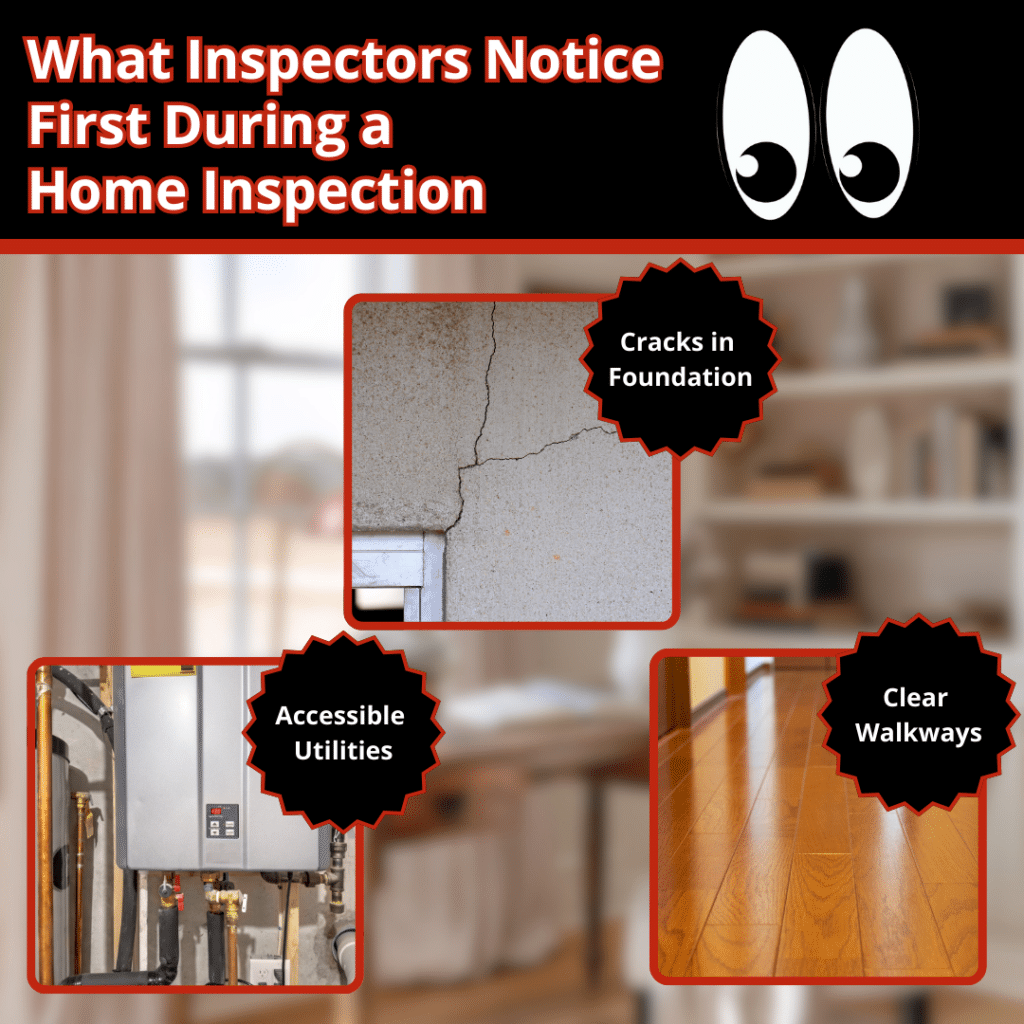
The inspection begins the moment the inspector drives up. The outside of your home tells an early story about how well the property is maintained. Inspectors look for safety, access, and general upkeep before they ever reach the front door.
They will check for:
- Clear walkways
- Grass and bushes trimmed away from the house
- Safe and open steps
- Easy access to exterior utilities
- Standing water, drainage issues, or roof overflow
- Visible cracks in the siding or the foundation
If the outside looks clean and simple to navigate, the inspector can start the inspection right away. If not, they may need to move items, wait for access, or note issues that change how they approach the rest of the home.
How to Clean for Inspection by Prioritizing Areas That Matter Most
Cleaning the right areas helps the inspector focus on the systems and structures that matter most to a home buyer. This section uses the keyphrase naturally by walking the reader through how to clean for inspection in a practical, step-by-step way.
Start with rooms that contain the highest number of systems:
- Kitchens
- Bathrooms
- Laundry areas
- Utility rooms
- Hallways and entries
These spaces often reveal leaks, moisture problems, ventilation issues, or electrical concerns. A clean room makes these problems easy to catch early.
Top Priority Cleaning Tasks Before a Home Inspection
|
Task |
Why It Matters |
|
Remove clutter from all flooring |
Keeps the inspector safe and speeds up the process |
|
Clear areas around HVAC, panels, and plumbing |
Helps the inspector complete a full review without delays |
|
Clean sinks, tubs, and under-sink areas |
Reveals leaks, stains, or moisture problems |
|
Wipe surfaces and appliances |
Makes water spots and damage easier to notice |
|
Replace HVAC filters |
Shows basic home care and improves airflow readings |
|
Sweep and tidy entries |
Creates safe and simple access for inspectors |
Ensure Clear Access to All Utilities and Systems
Home inspectors must be able to reach every major system. If anything blocks access, they cannot complete the inspection. This may cause delays or require a return visit.
Focus on creating open space in these areas:
1. Electrical panel
Move any boxes, furniture, or bins so the panel door can open fully.
2. Water heater
Clear at least two to three feet of space around the water heater.
3. Furnace or HVAC unit
Inspectors need room to see connections, filter slots, and panels.
4. Crawl space
Do not store anything on top of the crawl space entry.
5. Attic access
Make sure the ladder can come down safely, and the inspector has space to enter.
6. Main shutoff valves
These should be fully visible and easy to reach.
Blocked systems often cause incomplete inspection reports, which can raise questions from buyers. Clear access helps both the inspector and the seller.
Kitchen and Bathroom Prep That Helps You Avoid Surprise Issues
Kitchens and bathrooms are two of the most inspected areas in any home. They reveal plumbing problems, electrical concerns, and moisture issues faster than any other rooms.
Kitchen preparation tips
- Clear all counters so the inspector can test outlets and appliances.
- Clean behind small items like toasters or coffee makers.
- Empty the sink and run water to check for slow drains.
- Open space under the sink so the inspector can check for leaks.
- Wipe the dishwasher door and ensure it can open fully.

Bathroom preparation tips
- Remove items around sinks and tubs.
- Clean around the base of toilets so the inspector can check for movement.
- Turn on fans to confirm they work.
- Check under vanities for moisture marks or drips.
- Make sure shower walls are clean so tiles and grout are visible.
Water damage is a major concern for buyers. The U.S. News reports that water damage makes up almost 24 percent of homeowner insurance claims. Cleaning helps reveal problems so you can address them early.
Cleaning Tips That Reveal Hidden Problems Before the Inspector Does
A deep cleaning often brings hidden issues to the surface. This does not hurt the inspection. It actually helps you prepare and reduce the number of repairs buyers may request later.
Look for:
- Soft drywall near windows
- Stains around baseboards
- Moisture rings under sinks
- Gaps in caulking
- Unusual smells
- Rodent droppings in storage areas
- Loose flooring or tiles
If you find anything worrying, contact a qualified professional before the inspection. This small step can save time and reduce stress when the inspection report comes back.
You can also take simple photos of anything you repair. This helps document updates for buyer confidence.
Outdoor Areas That Can Flag Issues Before the Inspection Starts
The outside of your home can lead to some of the most important findings during an inspection. Cleaning helps uncover problems related to drainage, siding, wood rot, or structural wear.
Focus on these outdoor tasks
- Clean gutters so water flows away from your home.
- Make sure downspouts extend far enough to prevent pooling.
- Trim plants touching the home.
- Sweep porches and walkways.
- Remove storage items from patios, garage sides, and behind sheds.
- Clear space around the air conditioning unit.
A clean outdoor area makes it easier for the inspector to spot issues like loose boards, peeling paint, cracked concrete, or early rot.
What Not to Do When You Clean for Inspection
Avoid anything that hides or covers a potential issue. Inspectors look for clues everywhere. If they sense something was hidden, it may create more questions in the final report.
Do not:
- Paint over water stains
- Place furniture in front of utility areas
- Use strong scents to hide odors
- Tape or block vents
- Lock doors without explaining why
Being open and honest helps the inspection go faster and makes buyers feel more comfortable with the condition of the home.
When a Pre-Listing Inspection Can Save Time and Reduce Stress
A pre-listing inspection is one of the best ways to avoid surprises during a buyer inspection. It gives you a full picture of the home’s condition before you list it. This lets you make repairs on your schedule.
Benefits of a pre-listing inspection include:
- Fewer repair requests
- Better pricing decisions
- Lower stress during negotiations
- Earlier discovery of hidden problems
- Clearer expectations for buyers
A pre-listing inspection also supports faster closings because fewer unexpected issues slow down the process.
Related Questions
How clean should my house be for a home inspection?
It should be tidy enough for the inspector to access everything without moving your items.
Will a messy house affect my inspection report?
Clutter may hide problems. Inspectors also note blocked access and things that fail a home inspection.
Do inspectors check inside closets and cabinets?
Yes, especially areas with HVAC, plumbing, or electrical components.
What happens if the inspector cannot access part of my home?
The inspector will mark that area as not inspected. The buyer may request another visit.
What should I fix before a home inspection in Atlanta?
Check for leaks, smells, replace filters, test outlets, and correct small safety items.
Does clutter impact a buyer’s perception during an inspection?
Yes. Buyers may feel the home has not been maintained or home inspection-ready.
Conclusion
Cleaning for an inspection is simple and helps prevent misunderstandings, delays, and surprise issues. A clean and open home lets the inspector check every system and provide a complete report. It also helps buyers feel confident as they move toward closing.
If you want a smoother selling process, consider scheduling a home inspection or pre-listing inspection with Champia. Our team provides clear, detailed reports so you can move forward with confidence.