
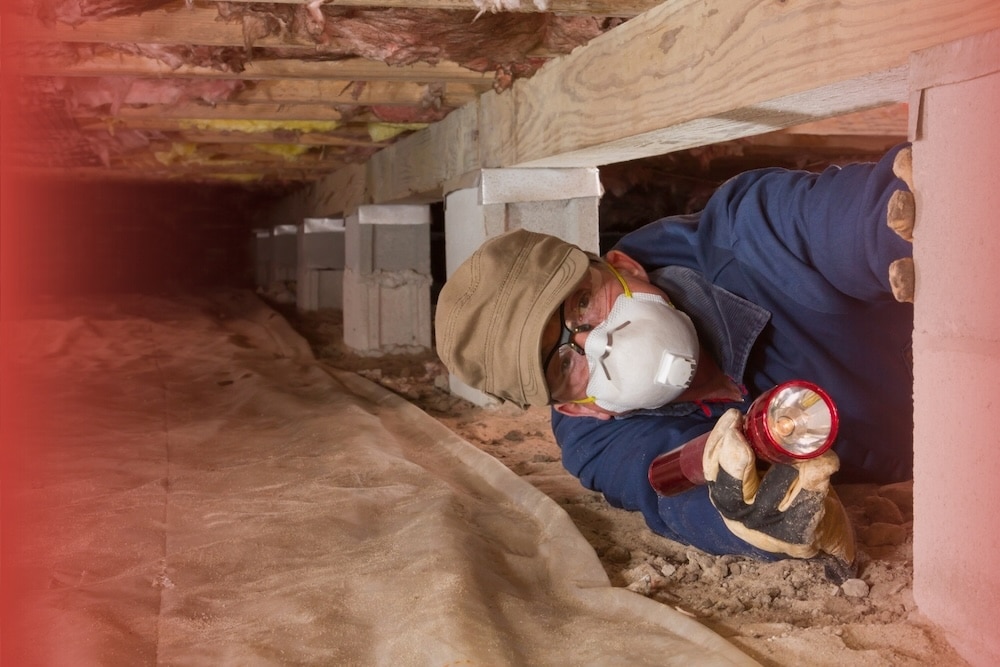
Crawlspace moisture is almost always caused by one of three things: water getting in from outside, humid outdoor air coming through open vents, or leaks from plumbing above.
At Champia Real Estate Inspections, we find crawlspace moisture in Atlanta and Ann Arbor homes year-round, and the source is usually fixable once you know where to look.
Left alone, crawlspace moisture leads to mold, wood rot, higher energy bills, and pests. This guide covers what causes it, the warning signs you can spot without ever going under the house, what a healthy humidity level looks like, and how to fix crawlspace moisture for good.
What Causes Moisture in a Crawlspace?
Crawlspace moisture gets in three main ways: bulk water from the ground, humid air from outside, and leaks from inside the home. Most damp crawlspaces have more than one of these working at once.
- Poor drainage and grading. When the soil around your foundation slopes toward the house, or gutters and downspouts dump water at the base of the wall, rain runs straight into the crawlspace. This is the number one source in vented crawlspaces.
- Humid outside air enters through vents. In hot, humid climates like Georgia’s, warm outdoor air enters through crawlspace vents and hits cooler framing and ductwork, where it condenses into water. Vents that were meant to dry the space often make it wetter.
- Plumbing leaks. A dripping supply line, a leaking drain, or a failed water heater can release water directly under the floor.
- Ground moisture rising through bare soil. An exposed dirt floor lets moisture wick up from the earth into the air and wood above it around the clock.
- No vapor barrier, or a torn one. Without a sealed ground cover, there is nothing stopping that soil moisture from evaporating into the space.
Warning Signs of Crawlspace Moisture You Can Spot From Inside Your Home
You do not need to crawl under the house to suspect a crawlspace moisture problem. Most warning signs show up in the living space above.
- A musty or earthy smell, often strongest on the first floor
- Indoor humidity that stays high even when the HVAC runs
- Floors that feel soft, sag, or bounce
- Visible mold or mildew on baseboards, or condensation on windows
- More spiders, ants, roaches, or rodents than usual
- Higher-than-normal energy bills
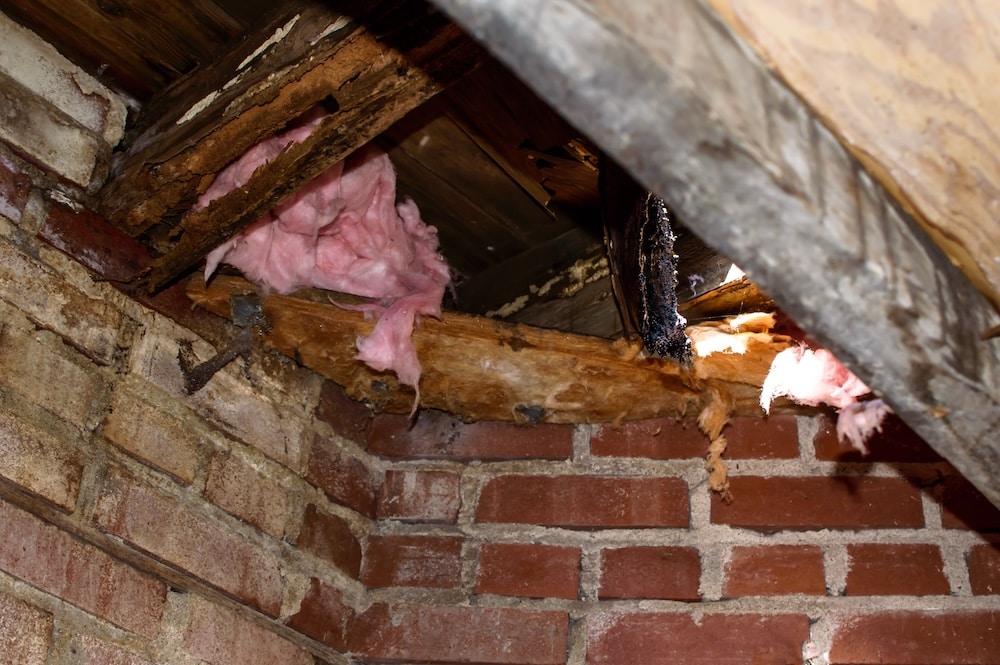
If you do go under the house, look for standing water, water stains, a white crystalline powder on masonry (efflorescence), damp or drooping insulation, and rust on metal fasteners.
The DOE’s Building America program recommends homeowners inspect the crawl space at least once a year, ideally in spring or fall after a heavy rain.
Why Crawlspace Moisture Is a Problem
Crawlspace moisture does not stay in the crawlspace. Because of the stack effect, a large share of the air you breathe upstairs starts down there, so moisture problems become whole-home problems.
- Structural damage. Wood begins to rot and lose strength as its moisture content climbs, which shows up as sagging or spongy floors.
- Mold and air quality. Damp framing and insulation grow mold, and those spores travel up into living space, where they can trigger allergies and breathing problems. If you are concerned about spores, mold testing can confirm what is actually present.
- Pests. Termites, carpenter ants, and rodents are all drawn to moisture and softened wood, which is why a termite inspection often goes hand in hand with a damp crawl space.
- Higher energy bills. Damp insulation works poorly, and your HVAC has to work harder, so you pay more to stay comfortable.
What Is a Healthy Crawl Space Humidity Level?
A healthy crawl space stays between 30% and 50% relative humidity year-round, and you never want it fully dry. Once relative humidity climbs past about 60%, the EPA notes that mold can grow on most surfaces, and pests and wood rot follow.
Wood itself is the real thing you are protecting. Framing lumber holds an acceptable moisture content of roughly 7% to 19%; above that range, fungal growth and decay set in. Too dry matters too: if humidity sits below 30% for long stretches, joists and beams can dry out, shrink, and crack. A cheap hygrometer, available for a few dollars at any hardware store, lets you track the number so you catch a swing before it becomes damage.
How to Fix and Prevent Crawlspace Moisture
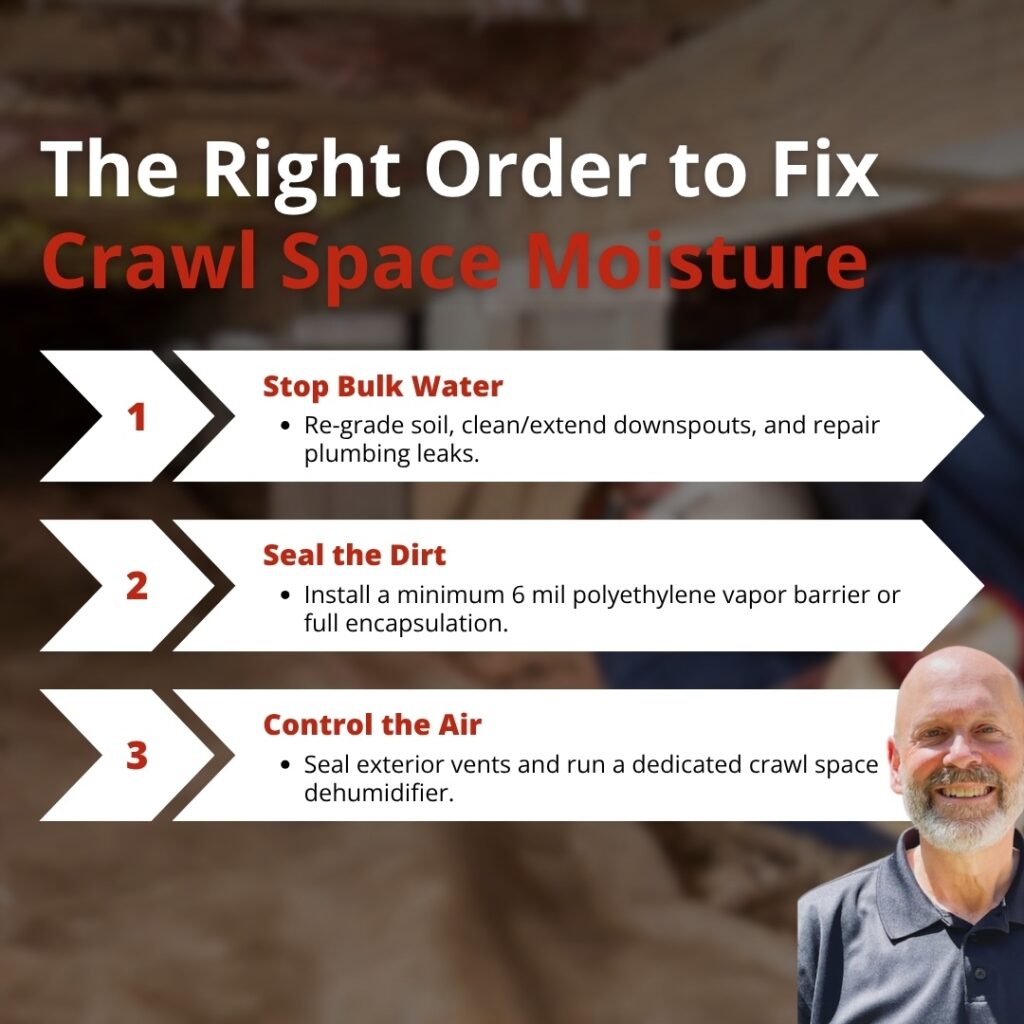
Fixing crawlspace moisture works from the outside in: stop the water first, seal the ground, then manage the air. Skipping straight to a dehumidifier without addressing the water source is the most common mistake homeowners make.
Fix the Water First
Start with bulk water, because no barrier or dehumidifier can keep up with an active leak or steady runoff. Re-grade the soil so it slopes away from the foundation, extend downspouts well past the house, and clean or add gutters.
If water still collects, an interior drain and sump pump can carry it out. Repair any plumbing leaks under the floor before moving on.
Add a Vapor Barrier or Full Encapsulation
Once the space is dry, cover the exposed dirt. A polyethylene vapor barrier at least 6 mil thick, laid across the entire floor and overlapped at the seams, blocks moisture from rising out of the soil.
For a lasting fix in humid climates, many homeowners go further and encapsulate: sealing the vents, lining the floor and walls, and turning the crawlspace into a closed, conditioned area. Building scientists generally recommend closed, insulated crawlspaces over vented ones in warm, humid regions.
Manage the Air
With the water stopped and the ground sealed, manage whatever humidity remains. A crawlspace dehumidifier holds the air in that 30–50% band, and sealing the vents keeps humid outside air from re-entering. This is the finishing step, not the starting point.
Related Questions to Explore
What is an acceptable moisture level in a crawlspace?
Aim for 30% to 50% relative humidity, and wood moisture content between about 7% and 19%. The International Residential Code requires framing lumber to be at or below 19% moisture content when a home is enclosed, and building-science guidance treats readings above roughly 19% as the point where wood can support mold and, if it stays wet, decay.
How do you get rid of moisture in a crawlspace?
Fix the water source first (grading, gutters, leaks), seal the dirt floor with a vapor barrier or full encapsulation, then control the remaining humidity with a dehumidifier and sealed vents. Doing these in order is what makes the fix stick.
Does a crawlspace need a vapor barrier?
Yes. Any crawlspace with an exposed dirt floor should have a vapor barrier. Without one, ground moisture evaporates into the space continuously, feeding mold and wood rot no matter how well you manage the air.
Can crawlspace moisture make you sick?
It can contribute to health problems. Mold spores from a damp crawlspace travel up into living space and can trigger allergies, asthma, and other respiratory issues, especially in sensitive people. This is one reason mold when buying a home is worth checking before you close.
How does moisture in the crawlspace affect the rest of the house?
A large portion of your indoor air rises from the crawlspace, so moisture below leads to musty smells, high indoor humidity, sagging floors, and higher energy bills upstairs. A dry crawlspace makes the whole house healthier and more efficient.
When to Call a Professional
Some crawlspace moisture is a weekend project, and some needs a trained eye. If you see standing water after every rain, mold across the framing, soft or sagging floors, or you simply are not sure how bad it is, that is the point to bring in a professional.
A home inspector can measure the actual humidity and wood moisture content, trace where the water is coming from, and tell you what the repair really requires before you spend money on the wrong fix.
Champia has inspected more than 100,000 homes across the Atlanta metro area and around Ann Arbor since 1987, and our crawlspace moisture evaluations are part of that work.
Because Georgia does not license home inspectors, choosing an ASHI-, ICC-, and NRPP-certified team matters.
If you are buying a home, a moisture problem found before closing is far cheaper to solve than one you inherit. Our home inspection reports are delivered within 24 hours.
Conclusion
Crawlspace moisture is common, and it is fixable when you handle it in the right order.
- Most crawlspace moisture comes from poor drainage, humid air through vents, or plumbing leaks, and the warning signs usually show up inside your home.
- Keep the space between 30% and 50% relative humidity; fix the water first, then seal the ground, then manage the air.
- When the problem is bigger than a vapor barrier, a certified inspection tells you exactly what you are dealing with.
Not sure what is happening under your floors? Schedule a Champia inspection and get clear answers within 24 hours.