
A home inspection for a new home covers the same structure and systems as any other home inspection, with one important advantage: timing. Brand-new homes can be inspected at multiple stages of construction, not just before closing.
An independent inspector checks everything from the foundation poured on day one to the finished attic on move-in day, all on your behalf, not the builder’s.
This post covers what happens during each phase of a new home inspection, what inspectors specifically check in new builds, what defects commonly turn up, and how to get the most out of the process.
Is a New Home Inspection Really Different?
A new home inspection follows the same professional standards as a standard home inspection: a visual, non-invasive examination of the home’s structure, systems, and components. What makes it different is what you can see before the walls close.
Once drywall goes up, the framing, insulation, plumbing runs, and electrical wiring behind it are permanently hidden. A final-only inspection cannot catch problems that are sealed inside your walls.
That is why many inspectors and buyer advocates recommend a phased approach for new construction, with separate inspections at key milestones during the build.
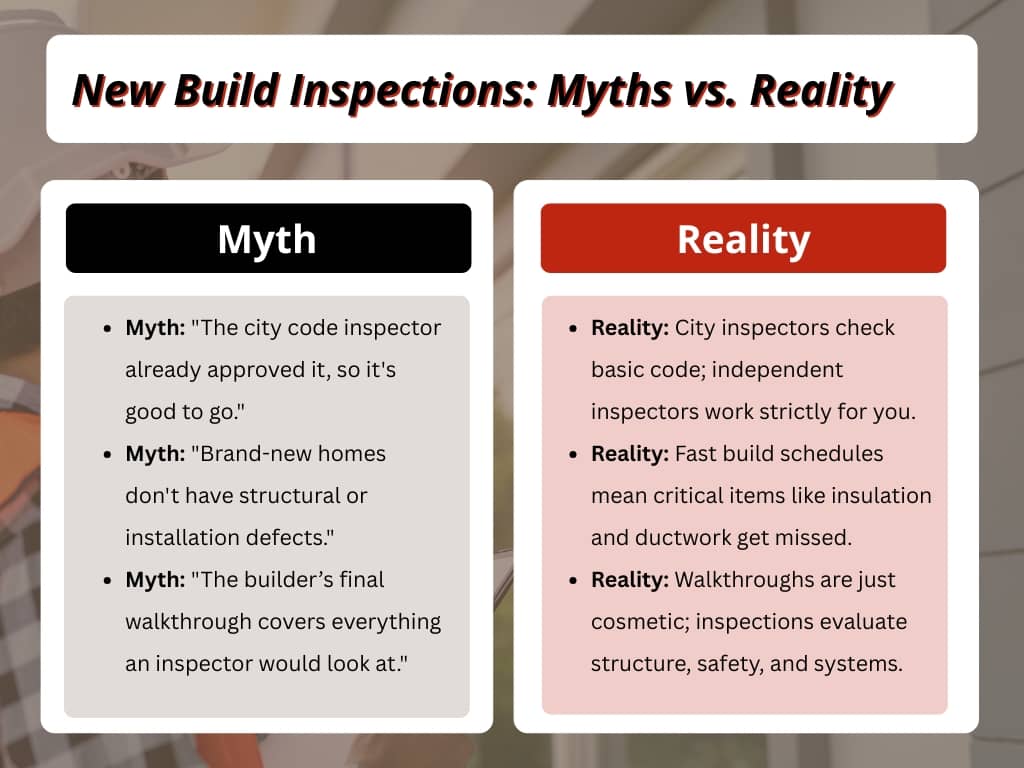
It is also worth knowing that municipal building inspections check for code compliance on the builder’s permit. They work for the building department, not for you. An independent inspector you hire brings a completely different scope and responsibility to the process.
For a detailed overview of what certified inspectors are and are not required to examine, the ASHI Standards of Practice sets the scope that most licensed inspectors follow.
If you want a broader look at what buyers and sellers should know about the inspection process overall, Champia’s buyer and seller guide to home inspections is a good starting point.
The Three Phases of a New Construction Home Inspection
Most new construction inspection services break the process into three phases, each timed to a specific point in the build. You can hire an inspector for just the final phase, but the more access you get before walls close, the more you find.
Phase 1: Foundation (Pre-Pour) Inspection
The first phase happens before the concrete foundation is poured. At this point, the inspector checks the site grading, soil preparation, rebar placement, and footing excavation.
Foundation problems are among the most expensive repairs a homeowner can face, and most of the conditions that cause them are only visible at this stage.
Phase 2: Pre-Drywall Inspection
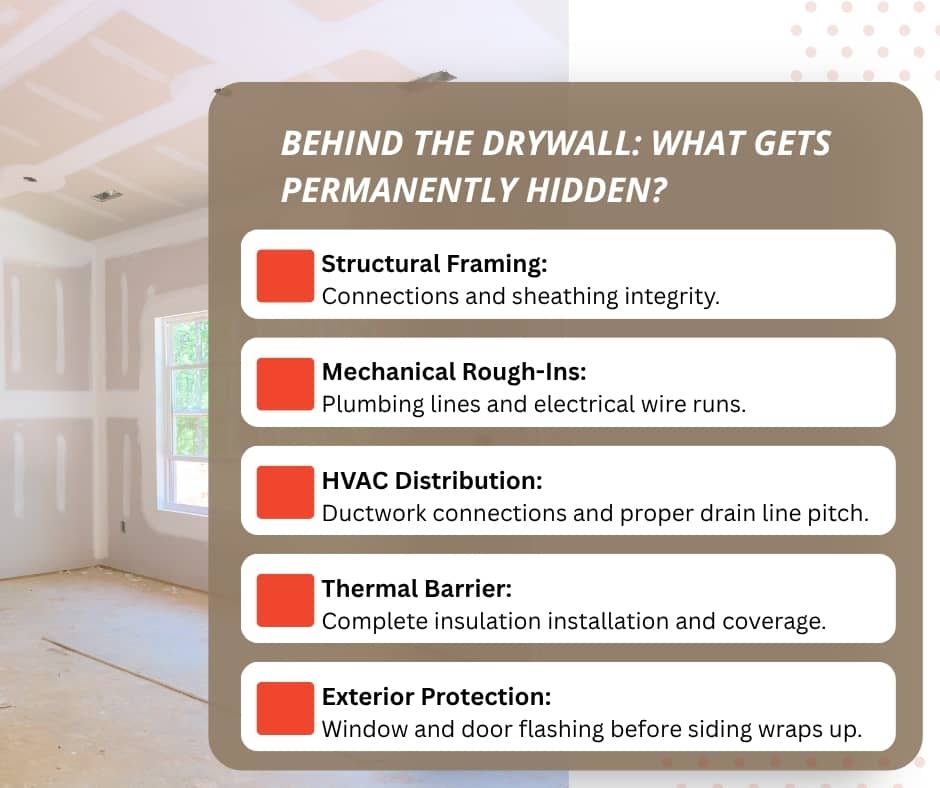
This is often the most valuable phase. After framing is complete but before drywall covers it, the inspector can see the entire structural skeleton of the house. A pre-drywall inspection typically covers:
- Framing connections and structural sheathing
- Rough-in plumbing and drain lines
- Electrical wiring runs and panel rough-in
- HVAC ductwork, air handler placement, and drain line pitch
- Insulation installation and coverage
- Window and door flashing
Once drywall goes up, none of these items are visible again without opening the walls. Problems caught at this stage are almost always fixed by the builder at their cost before closing.
Phase 3: Final Walkthrough Inspection
The final inspection happens when the home is substantially complete, typically one to two weeks before your closing date. This is the inspection most buyers schedule if they are only going to schedule one.
The inspector evaluates all the same systems as a standard home inspection: roof, attic, foundation, exterior, electrical, plumbing, HVAC, insulation, and interior components.
Even when a home looks finished and clean, the final inspection routinely turns up items that the builder’s punch list and municipal code inspection missed.
What Home Inspectors Look for in a New Build
New construction home inspectors follow the same standards of practice as any licensed home inspector, but pay particular attention to issues common in fast-paced tract builds where subcontractors rotate frequently. Common focus areas include:
- Roof installation: missing or improperly installed shingles, flashing around chimneys and valleys, soffit and fascia issues
- Grading and drainage: an improper slope near the foundation can cause water intrusion within the first year
- HVAC systems: ductwork connections, air handler clearances, refrigerant line insulation, and drainage line pitch
- Electrical: non-functioning outlets, missing GFCI and AFCI protection in required locations, improper wire gauge
- Plumbing: drain line slope, water heater installation, pressure relief valve, and supply line connections
- Attic: ventilation, insulation coverage and depth, proper sheathing, and rafter connections
- Foundation: visible cracking, step cracks in masonry, efflorescence indicating moisture movement
Champia inspectors also use thermal imaging cameras during inspections to spot moisture and electrical hot spots that are not visible to the naked eye.
Common Defects Found in New Construction Homes
New homes have defects. That is not an opinion; it is a pattern that shows up consistently across new construction inspections nationwide. Some of the most frequently found issues include:
- Improper grading and drainage around the foundation and exterior
- Missing or inadequate attic insulation in corners, eaves, and around HVAC penetrations
- HVAC installation issues, including ductwork disconnects, improperly pitched drain lines, and equipment clearance violations
- Electrical rough-in errors caught at pre-drywall: wrong wire gauge, missing grounding, incorrect receptacle placement
- Foundation cracking, including step cracks and settlement cracks that can begin within months of occupancy
- Roof flashing issues around chimneys, skylights, and valleys, where water is most likely to enter
- Non-functioning fixtures and outlets throughout the finished home
These defects are not always signs that your builder did poor work. There are signs that fast-paced construction with rotating subcontractor crews produces items that fall through the cracks of a builder’s internal quality review. An independent inspector is the buyer’s accountability check.
For a deeper look at the framework certified inspectors use, Champia’s guide to the 3 S’s of home inspection covers how Safety, Structure, and Systems work together as the evaluation lens.
How Much Does a New Construction Home Inspection Cost?
A new construction home inspection typically costs between $350 and $500 for a final-only inspection on a standard single-family home. Phase inspections (all three stages) generally run between $600 and $1,200, depending on the home’s square footage and the inspection company’s pricing structure.
Compared to the cost of repairing defects you discover after closing, or contesting a dispute with your builder, the inspection fee is a clear return on investment.
When Should You Schedule a New Home Inspection?
For phased inspections, timing is tied to the construction calendar:
- Phase 1 (foundation): Schedule when site prep and footing work are complete, before the concrete pour
- Phase 2 (pre-drywall): schedule when framing, rough-in mechanical work, and insulation are complete, but drywall has not been hung yet
- Phase 3 (final): schedule one to two weeks before your closing date, when the home is substantially complete
If you are only scheduling a final inspection, contact a certified inspector as soon as your builder confirms a closing date. Inspectors book out, and you want enough time to review the report and raise any findings before closing.
One additional timing point: Georgia homeowners should consider scheduling an 11-month inspection before the builder’s one-year obligation expires.
This allows a professional to identify defects while the builder is still responsible for fixing them.
Related Questions to Explore
What core criteria do professionals use to evaluate a property’s condition?
Certified inspectors evaluate properties across three primary lenses: safety, structure, and systems. These criteria apply universally, whether you are referencing a buyer and seller guide to home inspections or looking specifically at how the 3 S’s of home inspection protect your investment. Understanding these categories helps property owners interpret their final reports accurately.
Are specialized environmental tests included in a standard property inspection?
Standard residential inspections focus on the visible structural and mechanical components of a home. Environmental hazards require specialized equipment and laboratory analysis. Because of this, buyers frequently pair their standard walkthrough with dedicated mold testing and radon testing to ensure the living environment is completely safe.
How do inspectors identify hidden issues without cutting into walls?
Modern inspection technology allows professionals to see what the naked eye misses. By utilizing advanced thermography, inspectors can detect subtle temperature differences caused by hidden moisture plumes, missing insulation, or overheating electrical components behind drywall without causing any damage to the structure.
Which critical property systems require separate, specialized assessments?
Several high-risk or underground systems fall outside the scope of a standard visual check. Property owners often need to schedule standalone services to fully protect themselves, including a sewer scope to check main waste lines, a septic inspection for rural systems, a specialized pool inspection, or a termite inspection to look for wood-destroying organisms.
When to Call a Professional
You should hire a certified, independent home inspector before the drywall goes up in your new build, and again before closing. If your builder offers only a final walkthrough before closing, schedule your own inspector separately, ahead of that event, so you have documented findings to bring to the builder’s team.
When choosing an inspector for new construction, look for certifications from InterNACHI or ASHI, which require training and formal adherence to standards of practice.
Experience with new construction, specifically, is a plus because phased inspections require a different scheduling approach than resale inspections.
Champia Real Estate Inspections has completed over 100,000 inspections across the Atlanta metro area, with inspectors certified by ASHI, ICC, and NRPP. Schedule your new home inspection and receive your full report within 24 hours.
Conclusion
A home inspection for a new home gives buyers something no resale buyer gets: the option to inspect before walls close. The phased approach (foundation, pre-drywall, final) provides the most complete picture of a new home, with each phase catching issues the others cannot.
Whether you schedule one phase or all three, a certified independent inspector works for you, and that accountability matters when your builder’s construction calendar is moving fast.
Key takeaways:
- Phase inspections catch defects that final-only inspections cannot see after the drywall goes up
- New homes have defects at a similar rate to older homes; fast construction schedules are the primary driver
- An inspector certified through ASHI follows a formal standard of practice on your behalf
Ready to get started? Learn more about Champia’s home inspection services or schedule your inspection online.