
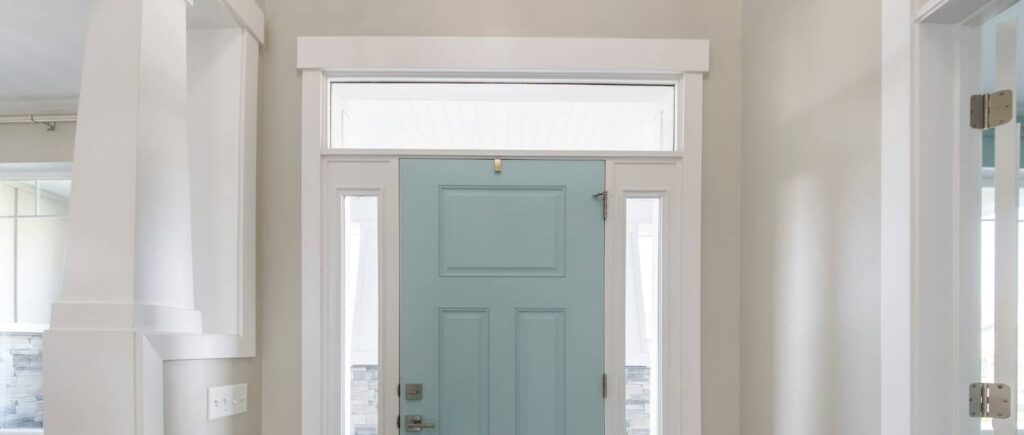
A transom window is a glass panel installed above a door or larger window, separated by a horizontal structural beam called the transom.
These narrow windows add natural light, architectural character, and in some cases ventilation to a home’s entryways and interior spaces.
At Champia Real Estate Inspections, our team evaluates transom windows during home inspections across Atlanta and Georgia every week.
This post covers what transom windows are, the different types, the benefits they offer, and the maintenance issues buyers and sellers should know before closing.
What Is a Transom Window?
A transom window is a horizontal glazed panel that sits above a door or primary window, separated from it by a structural crosspiece called the transom beam.
The term covers a wide range of styles, from simple rectangular panes to decorative arched fanlights and custom stained glass designs.
Transom windows have appeared in American homes for centuries.
Before air conditioning, operable transom windows above interior doors served a practical purpose: they could be propped open to let warm air circulate between rooms.
As HVAC systems became standard, most transom windows shifted to a purely decorative role. Today, you will find them in fixed (sealed, non-opening) and operable (hinged or awning-style) versions.
Types of Transom Windows
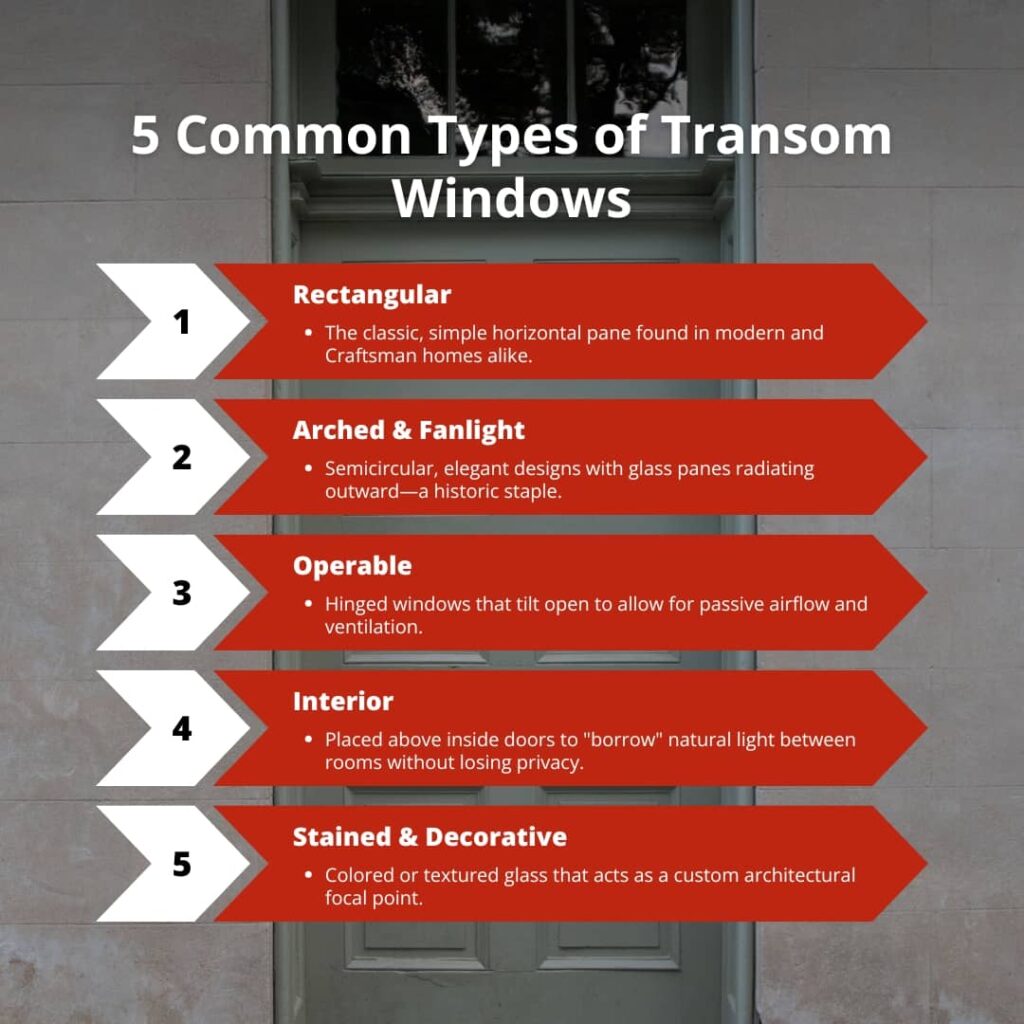
Not all transom windows look or work the same. Here are the most common types you will encounter during a home walkthrough or inspection.
Rectangular Transoms
The most common type. A simple horizontal rectangle of glass sits above the door frame or window opening. These appear in Craftsman bungalows, Colonial Revival homes, and modern new construction alike.
Arched and Fanlight Transoms
A fanlight is a semicircular or elliptical transom with a fan-like pattern of glass panes radiating from a center point.
These were popular in Federal-style and Georgian architecture and are a hallmark of many historic homes in Atlanta neighborhoods like Inman Park and Druid Hills.
Operable Transoms
Some transom windows are hinged at the top and can be tilted inward for ventilation. In Georgia’s hot, humid summers, an operable transom above an exterior door can help draw warm air out of the entryway without fully opening the door.
These units have moving parts, which means they require more maintenance than fixed transoms.
Interior Transoms
Transom windows are not just for exterior doors. Interior transoms above hallway doors, bathroom doors, and kitchen pass-throughs are common in open-concept renovations.
They borrow light between rooms without sacrificing privacy or structural integrity.
Stained and Decorative Glass Transoms
Found in Victorian, Gothic Revival, and Arts and Crafts-style homes, these transoms use colored or textured glass as a design feature.
They appear most often in older homes in historic preservation districts, where local guidelines may govern replacement materials.
What Are the Benefits of Transom Windows?
Transom windows serve several purposes in a home, most of which add real value for buyers.
Natural Light
The primary function of a modern fixed transom is light transmission. Placing glass above a solid door or a shorter window pulls daylight deeper into an entryway or interior room, reducing the need for electric lighting during the day.
Curb Appeal and Architectural Style
A well-chosen transom window ties a home’s exterior together. A fanlight above the front door signals a Federal or Colonial Revival style.
A bank of rectangular transoms above a garage door reads as Craftsman. These details matter to buyers evaluating architectural character and neighborhood fit.
Ventilation (Operable Models)
Operable transoms provide passive ventilation without creating a full cross-breeze security risk. In mild temperatures, cracking an operable transom window above an exterior door is enough to cool a foyer.
Privacy with Light
Interior transom windows over bathroom or bedroom doors let borrowed light pass through without creating a line of sight between rooms.
Frosted or textured glass in a transom is a practical solution in period-style renovations.
Do Transom Windows Affect Energy Efficiency?
Yes, but the impact depends on the unit type and installation quality. A fixed transom with double-pane, Low-E glass performs comparably to any other insulated window. According to the U.S. Department of Energy’s guidance on window energy performance, Low-E coatings reduce heat transfer significantly, which is especially relevant in Georgia’s climate zone, where solar heat gain is a year-round concern.
Older single-pane transoms, common in pre-1960 Atlanta bungalows, tell a different story. A thin pane of glass with a wood frame that has cycled through decades of Georgia humidity can become a meaningful source of air infiltration. This is one reason a home inspector’s review of transom windows matters before a purchase.
What Do Home Inspectors Look for in Transom Windows?
This is where a home inspector’s perspective adds something you will not find in a typical home improvement guide.
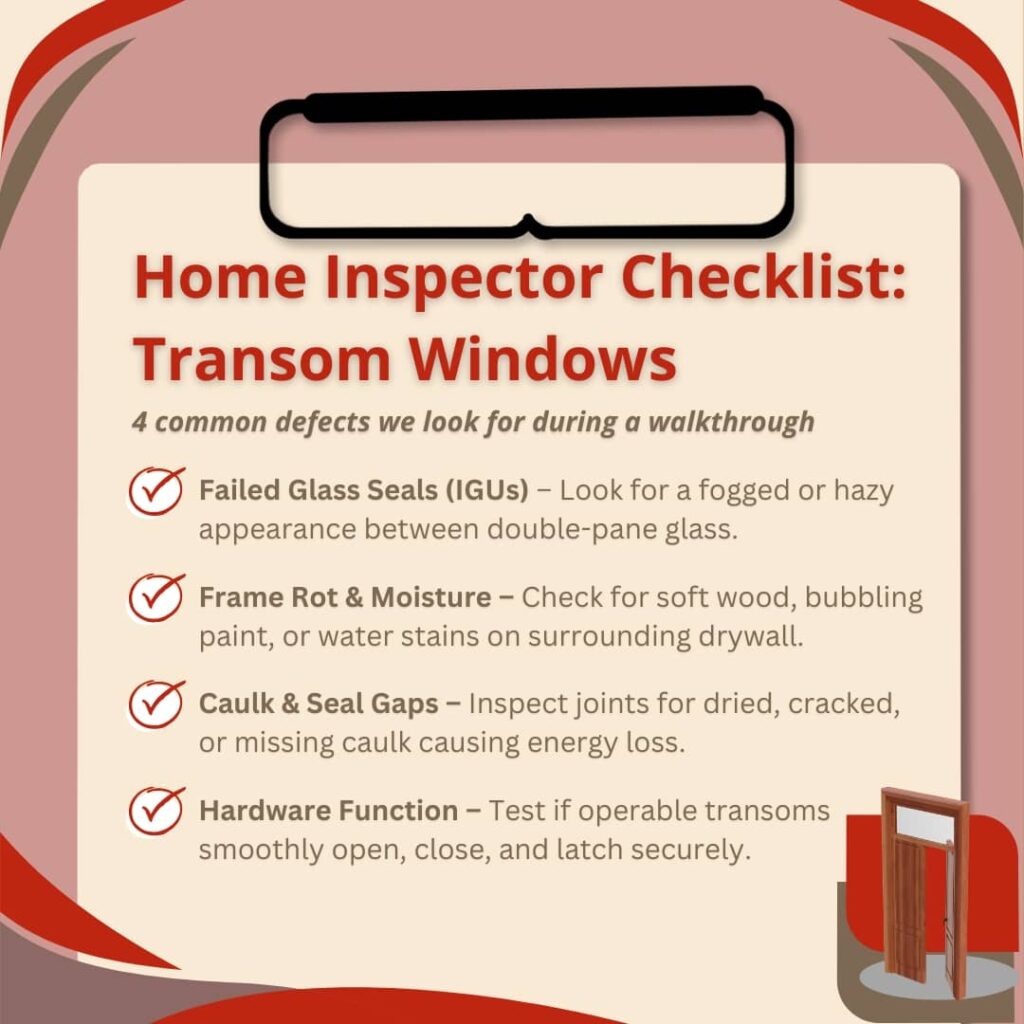
During a home inspection, our ASHI-certified inspectors evaluate transom windows for the following issues.
Failed Insulated Glass Units (IGUs)
A fogged or hazy appearance between the panes of a double-pane transom means the seal has failed. Once a seal fails, the insulating gas escapes, and the glass loses its thermal performance.
This is not a safety issue, but it is a defect that typically requires full unit replacement, not just resealing.
Frame Rot and Moisture Intrusion
Wood-framed transom windows are vulnerable to rot where the frame meets the door casing.
Signs include soft spots in the wood, paint bubbling at the frame edges, or interior staining on the drywall below the transom. These findings often point to moisture intrusion that extends beyond the window itself.
Caulk and Seal Gaps
The joint between a transom frame and the surrounding wall or door casing is a common air infiltration point.
Dried, cracked, or missing caulk is one of the most frequent maintenance findings on older homes. It is a low-cost fix with a real comfort payoff in Georgia’s summers.
Operable Hardware Function
If the transom is operable, the inspector checks that it opens, closes, and latches fully. Stuck or non-functional operable transoms are a common deferred-maintenance item that buyers should note before closing.
Knowing what inspectors evaluate in windows and trims can help buyers ask better questions when reviewing the inspection report.
Transom vs. Sidelight: What Is the Difference?
A transom window runs horizontally above a door or window. A sidelight runs vertically beside the door frame.
Both are common in traditional entry door assemblies, and both are often sold and installed as a single unit.
The key structural difference is that transoms span the full width of the opening above the door, while sidelights are narrow vertical panels flanking the sides.
When one component fails, such as a fogged sidelight pane or a cracked transom seal, the repair cost and process differ.
Transoms typically require more specialized trim work to access and replace because of their position above the door frame.
Related Questions to Explore
How can property owners detect hidden energy loss or moisture around window frames?
While a visual evaluation can spot peeling paint or decayed trim, it cannot see inside the wall cavity. Utilizing professional thermography allows inspectors to map thermal patterns and pinpoint hidden drafts, missing insulation, or active moisture plumes behind the drywall without causing structural damage.
What are the primary risks if structural or window leaks are left unaddressed?
Prolonged moisture intrusion from failing exterior seals damages wood framing and creates an ideal environment for fungal growth. If an inspection reveals evidence of historic water stains or rotted casings, pairing the standard structural check with dedicated mold testing ensures that hidden spores are not compromising the property’s indoor air quality.
Do brand-new homes require the same structural scrutiny as older properties?
Yes. Modern architectural features in new builds are highly susceptible to rushed subcontractor installation errors. Standard residential inspections look closely at window flashing, roof lines, and framing connections because even new construction can suffer from hidden defects that occur long before the final walkthrough.
How do structural evaluations differ for business properties versus residential homes?
Residential checks focus primarily on single-family safety, comfort, and standard building components. Conversely, a commercial inspection scales up the evaluation process to address heavy-duty storefront glazing, complex multi-zone HVAC systems, flat roofing materials, and distinct accessibility codes required for business environments.
When to Call a Professional
A transom window issue moves from DIY territory to professional territory when:
- The glass is fogged or hazy between panes. A failed IGU seal requires full unit replacement, which involves removing the door casing and ordering a custom-sized replacement.
- The frame shows soft wood, active rot, or interior moisture staining. Rot that has reached the structural framing around the door opening is a carpentry job that often involves replacing sections of the rough opening.
- The window is inoperable, and standard lubrication does not solve it. Operable transom hardware can be specific to the manufacturer and model, and ordering the correct replacement part requires knowing both.
- You are buying or selling a home. If a home inspection identifies any of the above, it is worth addressing before closing rather than negotiating a credit that may undervalue the actual repair cost.
Champia’s inspection team has completed more than 100,000 inspections across Atlanta and Georgia.
Our inspectors hold ASHI certification, the highest standard in the home inspection industry, which means they evaluate every window opening, door frame, and structural element against published inspection standards.
Conclusion
Transom windows are a practical and design-forward feature with a long history in American home construction. Whether you are buying a historic Craftsman bungalow in Grant Park, updating an entry door assembly in a newer suburb, or preparing to list a home and wondering what an inspector might flag, knowing how transom windows work, what types exist, and what can go wrong puts you in a stronger position.
Key takeaways:
- Transom windows sit above doors or larger windows and come in fixed and operable versions.
- Types include rectangular, arched, interior, operable, and decorative stained glass.
- Common inspection findings include failed IGU seals, frame rot, caulk gaps, and non-functional hardware.
- Well-maintained transoms add curb appeal and light; neglected ones can show up on inspection reports.
Ready to schedule a home inspection before buying or selling? Contact Champia Real Estate Inspections to book with our ASHI-certified team serving Atlanta and surrounding Georgia communities.