
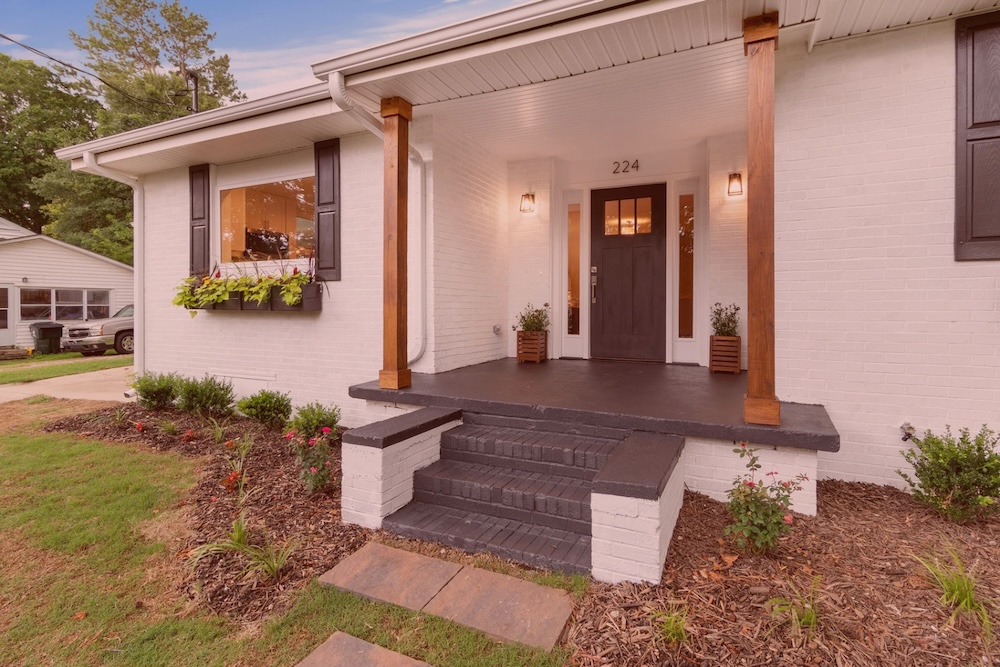
Buying a flipped house can be a smart move, but only if the work behind the walls is as good as the work you can see. Flippers spend their money on kitchens, floors, and paint because that is what sells.
Wiring, sewer lines, plumbing, and crawl spaces cost more and show less. At Champia Real Estate Inspections, we inspect homes across metro Atlanta, and flips deserve a close look.
This guide covers what cosmetic updates can cover up, how to check a flip before you make an offer, and how a buyer’s inspection helps you decide.
What Is a Flipped House, and Is Buying One a Bad Idea?
No, a flip is not automatically a bad buy. A flipped house is a home an investor bought, fixed up fast, and sold again for a profit. Some flippers pull permits, hire licensed trades, and fix the real problems.
Others do the cheapest repairs that look good in listing photos. From the street, you cannot tell which kind you have.
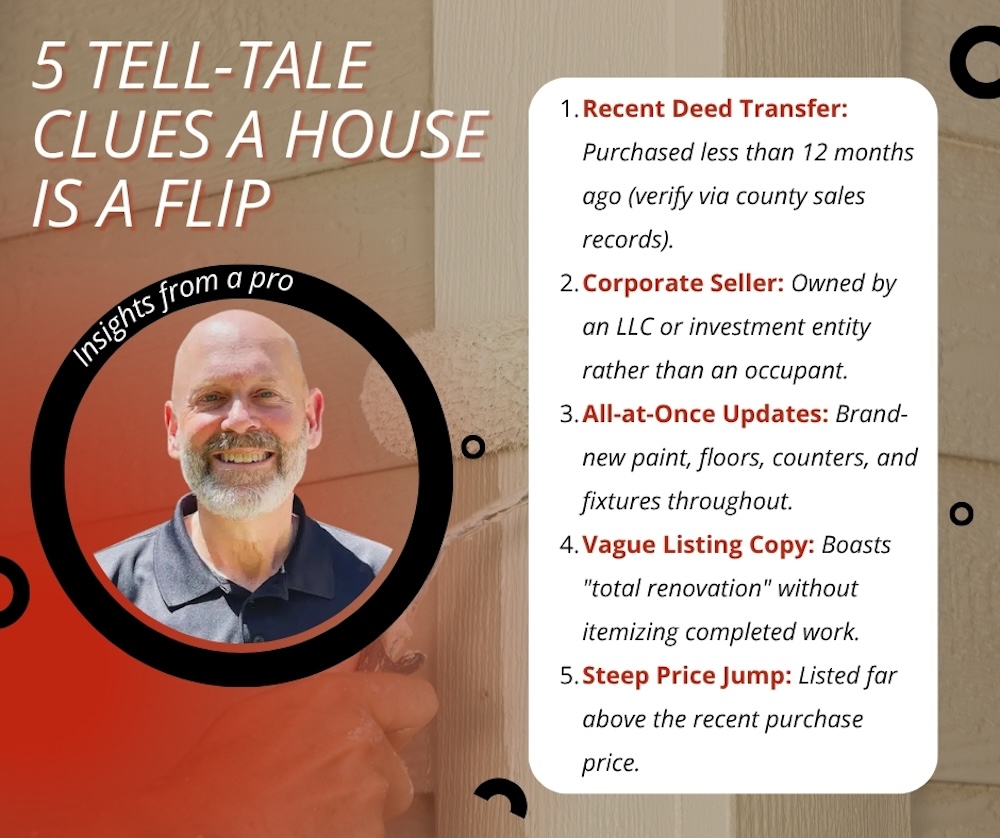
A few clues that a home is a flip:
- The seller bought it recently, often less than a year ago. County sale records show this.
- Nearly everything is new at once: paint, floors, counters, fixtures, and lighting.
- The listing talks about “fully renovated” but gives no list of what was done.
- The seller is an LLC or investment company, not a person who lived there.
- The price is well above what the seller paid recently.
None of these means the house is bad. They mean you should slow down and look closer.
Why a Standard Walkthrough Is Not Enough for a Flip
A walkthrough shows you finishes. A buyer’s inspection shows you the condition. Staged rooms, new paint, and fresh flooring are made to hide age and wear, so they tell you little about the systems that keep the house safe and dry.
A licensed home inspector checks the visible parts of the roof, structure, electrical, plumbing, heating and cooling, and crawl space or foundation.
On a flip, the inspector also looks for signs of rushed work, such as:
- Patched drywall near plumbing or electrical panels
- Outlets and switches that do not match the age of the wiring
- New flooring over soft or uneven spots
- Fresh paint on beams, joists, or ceilings in one area only
- Caulk and new trim hiding gaps and stains
A general inspection is visual and does not open up walls. That is why it helps to ask about add-on checks, like a sewer scope or a wood-destroying insect inspection, before you commit.
What Atlanta Flips Can Hide Behind Cosmetic Updates
Many in-town Atlanta neighborhoods and parts of southwest Atlanta have older homes, and older homes are where flippers find their best margins. They are also where hidden problems tend to live.
Georgia’s heat, humidity, and red clay soil add to the stress on crawl spaces and underground pipes. Atlanta has a mix of early and mid-1900s homes, and many of them have crawl spaces, older sewer lines, and original wiring or plumbing.
Those are the parts a flipper is least likely to touch, because buyers rarely see them.
Here is where we see the biggest gaps between how a flip looks and how it is built.
Old Wiring
New light fixtures and shiny outlet covers do not tell you what is inside the walls. Older Atlanta homes may still have knob-and-tube wiring, cloth-wrapped wires, or aluminum branch wiring. Some flips also have two-prong outlets swapped for three-prong ones with no ground wire behind them.
Aluminum wiring is a known concern. A 1974 safety release from the U.S. Consumer Product Safety Commission estimated that about two million homes had been built with aluminum wiring since 1965, and it linked overheated connections to fires.
Warning signs from that same release include warm switch plates, a burning plastic smell, and lights that flicker. You can read the full notice on the CPSC aluminum wiring safety page.
Ask for the electrical permit and the electrician’s name. If the panel was swapped, find out who did it and when.
Sewer Lines
The sewer line runs under the yard, so no paint job can improve it. Older homes may have clay or cast iron lines, and tree roots love to get into the joints. A flipper may never scope the line because it adds cost and might turn up a repair.
Signs of trouble include slow drains, gurgling toilets, a sewage smell, and wet or sunken spots in the yard. A sewer scope puts a camera in the line so you can see cracks, roots, and sags before you close. If a repair is needed, it is worth knowing who pays for sewer lateral repairs before you sign.
Plumbing
New faucets and a new vanity can sit on old pipes. Look for mixed pipe materials, which can mean a partial repair instead of a full update. Older homes may have galvanized supply lines that rust from the inside and cut water pressure.
Polybutylene pipe, used from the late 1970s into the 1990s, is another known problem material.
Hidden leaks are common behind fresh tile and new cabinets. Your inspector will check water pressure, run fixtures, look under sinks, and check ceilings below bathrooms for stains. Water stains painted over with stain blocker are a classic flip sign.
Crawl Space Problems
Many Atlanta homes sit on crawl spaces. Flippers rarely spend money down there because buyers rarely look. But moisture, mold, wood rot, and termite damage often start in the crawl space and show up later as soft floors, musty smells, or cracked tile.
Signs to watch for:
- Bouncy or uneven floors, even with new flooring
- A musty smell in the house or at the crawl space door
- Torn, missing, or wet vapor barrier
- Sagging or sistered joists
- New paint or fresh wood in one small area
Our guide on what causes crawl space moisture explains why this matters so much for floors and indoor air. A wood-destroying insect inspection is also smart in any older home. See our termite inspection service for details.
Quick Look: What You See vs. What to Check
| What you see | What may be behind it | How to check |
|---|---|---|
| New light fixtures and outlets | Old, ungrounded, or aluminum wiring | Inspector review of the panel and outlets, plus permit records |
| New bathroom and kitchen | Old supply lines, patched leaks | Pressure test, fixture run, moisture check |
| Clean yard and new landscaping | Cracked or root-filled sewer line | Sewer scope |
| New flooring | Damaged joists or a wet crawl space | Crawl space inspection |
| Fresh paint everywhere | Stains, mold, or prior leaks | Moisture meter and close visual review |
How to Check a Flip Before Your Inspection
Start with the paperwork. It costs nothing and often tells you a lot.
- Check the sale history. Look at when the seller bought the home and for how much.
- Ask for the permits. Ask the seller or listing agent for permits and receipts for the electrical, plumbing, HVAC, and structural work.
- Search for permits yourself. The City of Atlanta Office of Buildings issues permits and handles inspections and code enforcement. Start at the Office of Buildings page. Homes outside city limits use their own county or city permit office.
- Read the seller’s disclosure. Georgia generally leans toward buyer beware, and a seller’s answer of “don’t know” is allowed. Ask a real estate attorney what that means for your purchase.
- Schedule your inspection early. Your contract has a limited window to inspect and negotiate. Ask your agent how many days you have.
One caution: a permit search only shows permits that were pulled. It does not prove the work was done right. Missing permits are a red flag, but a permit alone is not a clean bill of health.
What to Do If the Inspection Finds Problems
A flip with problems is not always a dead end.
You have three common choices:
- Ask for repairs. The seller fixes the issues before closing, with proof of licensed work.
- Ask for a credit or price cut. Get written quotes from licensed trades, so your ask is based on real numbers.
- Walk away. If the issues are big, like major wiring, foundation, or sewer work, or if the seller will not budge, walking away is a fair call.
Your agent can help you write the request. Keep your inspection report and quotes handy, since they are your proof.
Related Questions to Explore
Should you buy a flipped house?
You can, if the work is permitted, done by licensed trades, and backed by a clean inspection. A flip with good paperwork and honest repairs can save you the cost and stress of a renovation. A flip with no paperwork is a bigger gamble.
Is buying a flipped house bad?
Not by default. The risk is hidden, rushed, or unpermitted work. Get a full inspection, ask for permits, and add a sewer scope on older homes. Our guide to the 3 S’s of home inspection shows what inspectors look at first.
What should you look for when buying a flipped house?
Look for signs that cosmetic work covers deeper problems: patched drywall, painted stains, uneven floors, mismatched outlets, and musty smells. Then check the systems you cannot see, which are wiring, sewer, plumbing, and the crawl space.
How do you buy a flipped house?
Research the sale history and permits, make your offer contingent on inspection, and hire a licensed inspector who knows older Atlanta homes. Use the report to decide whether to ask for repairs, ask for a credit, or walk away.
Can you buy a flipped house with an FHA loan?
Often yes, but FHA has special rules for homes that are resold soon after the seller bought them. Ask your lender early, since timing and appraisal rules can affect your closing.
Does a home inspection find everything wrong with a flip?
No. An inspection is a visual check of what can be reached and seen. It will not open walls or dig up the yard. That is why add-ons like a sewer scope matter, and why your inspector may suggest an electrician or plumber for a closer look.
When to Call a Professional
Call a licensed home inspector before your inspection window closes, not after. If the house is a flip, tell the inspector so they can look for the usual signs of fast work. If the inspector flags wiring, a failing sewer line, plumbing leaks, or crawl space damage, bring in a licensed electrician, plumber, or foundation specialist for written quotes before you negotiate.
Champia Real Estate Inspections serves buyers across metro Atlanta, from Atlanta, Buckhead, and Decatur to Union City, Marietta, and Alpharetta. You get your inspection report within 24 hours, which leaves time to negotiate before your inspection window closes.
If you are looking at a flip, our home inspection team can walk you through what we check and what add-ons make sense.
Conclusion
A fresh coat of paint tells you how a house looks. An inspection tells you how it is built. Before you buy a flip:
- Check the sale history and ask for permits and receipts.
- Hire a licensed inspector and ask about a sewer scope and a wood-destroying insect check.
- Use the report to ask for repairs, ask for a credit, or walk away.
Ready to look at a flip? Schedule a home inspection with Champia and get the facts before you close.